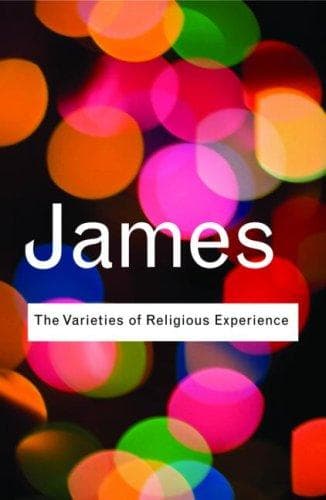
The Varieties of Religious Experience: A Study in Human NatureJames, William
ReligionComparative
The Varieties of Religious Experience: A Study in Human Nature
James, William
Conversion; Experience (Religion); Philosophy and religion; Psychology, Religious; Religion
Dislike of the saintly nature seems to be a negative result of the
biologically useful instinct of welcoming leadership, and glorifying the
chief of the tribe. The chief is the potential, if not the actual tyrant,
the masterful, overpowering man of prey. We confess our inferiority and
grovel before him. We quail under his glance, and are at the same time
proud of owning so dangerous a lord. Such instinctive and submissive hero‐
worship must have been indispensable in primeval tribal life. In the
endless wars of those times, leaders were absolutely needed for the
tribe’s survival. If there were any tribes who owned no leaders, they can
have left no issue to narrate their doom. The leaders always had good
consciences, for conscience in them coalesced with will, and those who
looked on their face were as much smitten with wonder at their freedom
from inner restraint as with awe at the energy of their outward
performances.
Compared with these beaked and taloned graspers of the world, saints are
herbivorous animals, tame and harmless barn‐yard poultry. There are saints
whose beard you may, if you ever care to, pull with impunity. Such a man
excites no thrills of wonder veiled in terror; his conscience is full of
scruples and returns; he stuns us neither by his inward freedom nor his
outward power; and unless he found within us an altogether different
faculty of admiration to appeal to, we should pass him by with contempt.
In point of fact, he does appeal to a different faculty. Reënacted in
human nature is the fable of the wind, the sun, and the traveler. The
sexes embody the discrepancy. The woman loves the man the more admiringly
the stormier he shows himself, and the world deifies its rulers the more
for being willful and unaccountable. But the woman in turn subjugates the
man by the mystery of gentleness in beauty, and the saint has always
charmed the world by something similar. Mankind is susceptible and
suggestible in opposite directions, and the rivalry of influences is
unsleeping. The saintly and the worldly ideal pursue their feud in
literature as much as in real life.
For Nietzsche the saint represents little but sneakingness and
slavishness. He is the sophisticated invalid, the degenerate _par
excellence_, the man of insufficient vitality. His prevalence would put
the human type in danger.
Public-domain text, read in full here on John Shaqi.
Reviews
Reviews
No reviews yet
Be the first to share your thoughts on this work.
Elsewhere in the archive
Join the Discussion
Join the discussion
Sign in to leave a comment or review.
Sign InorCreate an account