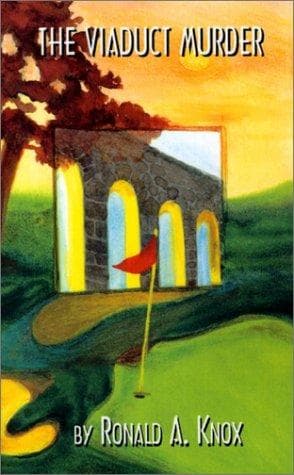
Detective and mystery stories; England -- Fiction; Murder -- Investigation -- Fiction
At Paston Oatvile something did turn up—Brotherhood got out of the
train decidedly the worse for drink. Davenant, it is clear, had up to
this time no sinister intentions, for he talked to one of the porters
when he alighted, and then went up to Brotherhood and hailed him as an
acquaintance. Brotherhood was far too muzzy to be afraid of him; he
hailed him as good old Davenant, and suggested that they should have a
drink between trains at the inn opposite the station. Davenant knew
that drinks were not served at that hour, but he accompanied him
willingly enough; they wasted a little time trying the door, and then
saw the train for Paston Whitchurch steaming out of the station. You
will observe that Brotherhood was by now artificially deprived of his
luggage. His box went on to Binver, so did his great-coat (with the
season-ticket in it) which he had thrown into the 4.50 from the
platform. Both were afterwards recovered by the police, but were of
little use to them.
Had Brotherhood been sober, he would have gone back to the station, no
doubt, so as to telegraph to Binver about his things. As it was, he
willingly fell in with Davenant’s suggestion that they should walk
across to Paston Whitchurch by the field path, crossing the valley by
the railway viaduct. They walked, then, through the fog, not much
behind the train; perhaps Davenant may even have suggested the
possibly of overtaking it if it were held up by the signals. They did
not, in fact, overtake it. Davenant began to commiserate with
Brotherhood upon his bankruptcy, at which Brotherhood became extremely
cheerful, and explained that he had a wife, a deuced fine woman, who
had got a lot of his money in her own name, and he was going back to
her. Davenant expostulated, threatened, implored; nothing would
disturb the drunkard’s irritating good temper. Finally, Brotherhood
became lyrical over the charms of his wife just as they began to cross
the viaduct. It was too much for Davenant; in a fit of disgusted rage,
he turned and threw his gross companion over the edge of the slope.
There was one startled cry, and then nothing but silence and the fog.
Up to that moment Davenant had no plans; he had not thought of murder
even as a contingency. It is true, he had to confess to having sent
the cipher warning: but this, he insisted, had been a mere threat; he
was anxious to prevent Brotherhood doing anything before he could have
a talk with him. By the way, Brotherhood was at home the week-end
before his death, contrary to his usual custom. Mrs. Bramston does not
abide our question, otherwise we might have elicited the fact from
her. Davenant travelled up in the same train with him, and saw him
beginning Momerie’s _Immortality_—that was on the Monday morning; he
bought a copy himself at the bookstall and sent the cipher to him,
thinking he would probably be still reading the same book the next
day. The whole idea of the cipher, he says, was a mere foolish whim on
his part.
Public-domain text, read in full here on John Shaqi.
Reviews
Reviews
No reviews yet
Be the first to share your thoughts on this work.
Elsewhere in the archive
Join the Discussion
Join the discussion
Sign in to leave a comment or review.
Sign InorCreate an account