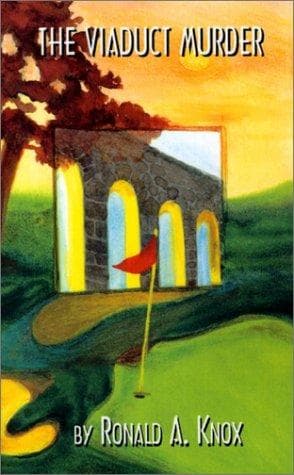
Detective and mystery stories; England -- Fiction; Murder -- Investigation -- Fiction
“‘But this theory of Carmichael’s makes an even prettier parable of
the great and unpardonable error which tries to make one thing out of
matter and Spirit—tells you that Spirit is a mode of matter, or the
other way round. Just as Carmichael will have it that Davenant is a
mode of Brotherhood. Like the materialist or the idealist he is
stultifying experience for the sake of a formula. Couldn’t one write
this up, somehow? Brotherhood, representing Matter, leaves off where
Davenant, representing Spirit, begins. Carmichael, representing the
modern mind, finds this an excellent reason for supposing that they
are really, somehow, the same thing. The materialist sees Brotherhood
everywhere, the Idealist sees Davenant everywhere, and consequently
neither of them can solve the detective mystery of existence. It looks
as if one could work up a sort of Oriental mythology out of it, as
good as most Oriental mythologies anyway. And the joke of it is that
Davenant’s really round the corner the whole time.’ I say, that was a
pretty good shot anyhow. Why, Carmichael, I even seem to have
anticipated your discovery of the secret passage.”
“H’m,” said Carmichael; “there are some interesting half-truths in all
that.”
Chapter XVI
Reeves promises to do his Best
The conversation recorded in the last chapter took place (I forgot to
say) on Saturday afternoon. It was while he was at tea downstairs that
a message was brought in to Reeves telling him that a lady wished to
see him on urgent business. She would not give her name, but she was
waiting for him in what was called “the small lounge”—a dreary little
room, which had something of the air of a hospital waiting-room; she
would be glad if he could come as soon as possible. Disregarding
Gordon’s suggestion that he should take Carmichael with him as a
chaperon, he made his way to the small lounge with some feeling of
self-importance, and found himself most unexpectedly confronted with
Miss Rendall-Smith.
“I’m afraid you think badly of me, Mr. Reeves,” she said, “and you’ll
probably think worse of me before I’ve finished.” (Reeves gurgled
dissent.) “The other day I turned you out of the house and told you to
your face you were a liar. And that’s a bad introduction for me when I
have to come to you, as I come now, asking for your help.”
Reeves was horribly embarrassed. You can offer whisky to a policeman
to show there is no ill-feeling, but it is more difficult to offer it
to a lady. “I’m sure I should be very glad to be of any use,” he said.
“I seem somehow to have made a bad impression on you the other day,
though I still haven’t the least idea how. Wouldn’t it really be
better if we put all our cards on the table and treated one another
frankly?”
Public-domain text, read in full here on John Shaqi.
Reviews
Reviews
No reviews yet
Be the first to share your thoughts on this work.
Elsewhere in the archive
Join the Discussion
Join the discussion
Sign in to leave a comment or review.
Sign InorCreate an account