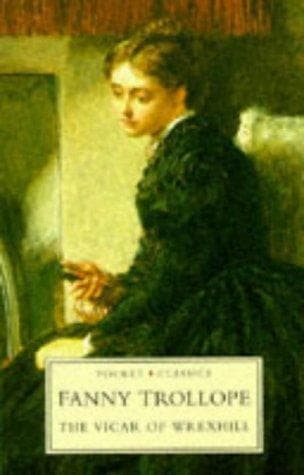
Clergy -- Fiction; Great Britain -- Fiction; Religious fiction
Helen, however, was too much irritated at this moment to submit, as she
had been ever used to do, to the commands of her mother; and still
feeling the pressure of the serious attorney's person against her own,
she let down the front glass, and very resolutely called to the
postillions to stop.
The boy who rode the wheeler immediately heard and obeyed her.
"Tell the servant to open the door," said she with a firmness and
decision which she afterwards recalled to herself with astonishment.
Thomas, who, the moment the carriage stopped, had got down, obeyed the
call she now addressed to him,--opened the door, gave her his arm; and
before either Mrs. Mowbray, or the serious attorney either, had fully
recovered from their astonishment, Helen was comfortably seated on the
dickey, enjoying the cool breeze of a delicious afternoon upon her
flushed cheek.
The turn which was given to this transaction by Mr. Stephen Corbold
during the tête-à-tête conversation he enjoyed for the rest of the
journey with the young lady's mother was such as to do credit to his
acuteness; and that good lady's part in it showed plainly that the new
doctrines she had so rapidly imbibed, while pretending to purify her
heart, had most lamentably perverted her judgment.
CHAPTER VI.
THE RETURN.
On reaching Mowbray, the first figure which greeted the eyes of the
travellers was that of Charles, stationed on the portico steps waiting
to receive them. A line from Helen to Rosalind, written only the day
before, announced their intended return; but the appearance of Charles
was a surprise to them, and to Helen certainly the most delightful that
she could have experienced.
Mr. Cartwright had written a long and very edifying letter to Mrs.
Mowbray, informing her of the unexpected arrival of her son from the
scene of his studies, and making such comments upon it as in his wisdom
seemed good. But though this too was written in the secret recesses of
his own chamber, with many affecting little circumstances demonstrative
of his holy and gentle emotions while so employed, it was, nevertheless,
under the influence of still riper wisdom, subsequently destroyed,
because he thought that the first surprise occasioned by the young man's
unwonted appearance would be more likely to produce the effect he
desired than even his statement.
Neither Rosalind nor Charles himself had written, because they were both
unwilling to state the real cause of his coming, and thought the plea of
_whim_ would pass off better in conversation than on paper. That Fanny
should write nothing which good Mr. Cartwright did not wish known, can
be matter of surprise to no one.
Helen, who had descried Charles before the carriage stopped, descended
from her lofty position with dangerous rapidity, and sprang into his
arms with a degree of delight, greater, perhaps, than she had ever
before felt at seeing him.
Public-domain text, read in full here on John Shaqi.
Reviews
Reviews
No reviews yet
Be the first to share your thoughts on this work.
Elsewhere in the archive
Join the Discussion
Join the discussion
Sign in to leave a comment or review.
Sign InorCreate an account