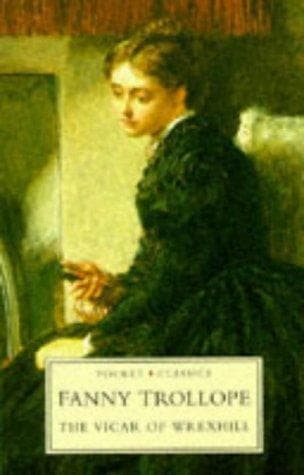
Clergy -- Fiction; Great Britain -- Fiction; Religious fiction
Fanny was growing tall, thin, sour-looking, and miserable; for having a
sort of stubborn feeling within her which resisted the assurances she
almost hourly received of having been elected to eternal grace, she was
secretly torturing her distempered conscience with the belief that she
was deluding every one but her Creator,--that he alone read her heart
and knew her to be reprobate, hardened, and unregenerate, and that she
must finally and inevitably come to be the prey of the worm that dieth
not and the fire that is never quenched. The sufferings of this innocent
young creature under this terrible persuasion were dreadful, and the
more so because she communicated them to none. Had she displayed the
secret terrors of her soul to Mr. Cartwright or her mother, she knew she
should be told with praises and caresses that she was only the more
blessed and sure of immortal glory for feeling them. Had she opened her
heart to her sister, her brother, or Rosalind, her sufferings would
probably have soon ceased; but from this she shrank as from degradation
unbearable.
Poor Rosalind, meanwhile, was as profoundly unhappy as it was well
possible for a girl to be who was young, beautiful, rich, talented,
well-born, sweet-tempered, high-principled, not crossed in love, and
moreover in perfect health.
Young Mowbray had just taken a distinguished degree at Oxford, and
having given a farewell banquet to his college friends, returned home
with the hope of speedily obtaining the commission in a regiment of
horse for which his name had been long ago put down by his father.
It was at this time that several circumstances occurred at Wrexhill
sufficiently important to the principal personages of my narrative to be
recorded at some length.
CHAPTER X.
FANNY'S RELIGION.--A VISIT TO OAKLEY.
It was towards the end of November that young Mowbray returned from
Oxford to his mother's house in Hampshire. As usual, the first three or
four hours' chat with Helen and Rosalind put him _au fait_ of all that
had taken place during his absence. The retrospect was not a cheering
one; yet most of the circumstances which tended to annoy him were of
that minor kind which none but a very gossiping correspondent would
detail--and Helen was not such. Besides, since the mysterious letter
which had recalled Charles to keep watch over Fanny, (the full and true
purpose of which letter he had never yet discovered,) Miss Torrington
had not written to him; and as she was now the chief historian, her
round and unvarnished tale made him acquainted with many particulars to
which Helen had scarcely alluded in her correspondence with him.
Helen Mowbray's was not a spirit to exhaust itself and its sorrows by
breathing unavailing complaints; and though her brother had pretty
clearly understood from her letters that she was not happy or
comfortable at home, it was from Rosalind he first learned how many
circumstances were daily occurring to make her otherwise.
Public-domain text, read in full here on John Shaqi.
Reviews
Reviews
No reviews yet
Be the first to share your thoughts on this work.
Elsewhere in the archive
Join the Discussion
Join the discussion
Sign in to leave a comment or review.
Sign InorCreate an account