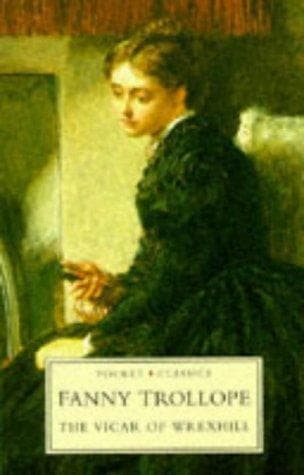
Clergy -- Fiction; Great Britain -- Fiction; Religious fiction
Those who are at all acquainted with the manner in which the "Church
Methodists," as they are called, obtain the unbounded influence which
they are known to possess in their different parishes, particularly over
the female part of their congregations, must be aware, that, great and
violent as the effect of their passionate extempore preaching often is,
it is not to that alone that they trust for obtaining it. From the time
Mr. Cartwright became Vicar of Wrexhill, he had been unremitting in his
exertions of every kind to obtain power, influence, and dominion
throughout the parish, and, on the whole, had been pretty generally
successful. How far his handsome person and pleasing address contributed
to this, it is not here necessary to inquire; but it is certain that he
drew upon these advantages largely in his intercourse with the females
in general, and with the ladies in particular. But though at first this
particular species of devotion was exceedingly agreeable to him, both in
its exercise and its success, he now found very considerable
inconvenience from the difficulty of keeping up the frequency of his
pastoral visits to his fair converts without giving more time to them
than was consistent with his infinitely more important avocations at the
Park.
As soon, however, as he perceived how completely the writing of tracts
occupied Fanny Mowbray during the time that was formerly bestowed upon
listening to his sentimental divinity, he determined that several others
of his female parishioners should dispose of their superfluous time in
the same manner.
Within twenty-four hours after he came to this decision, the three
Misses Richards had, each and every of them, purchased a quire of
foolscap paper, a quarter of a hundred of goose-quills, with a bottle of
ink, and a Concordance, in common between them. Miss Stokes too, the
little blue-eyed milliner, and Mrs. Knighton, the late post-master's
widow, and Mrs. Watkins, the haberdasher's wife, were all furnished with
abundant materials of the same value; and all of them determined to give
up every earthly thing, if it were necessary, rather than disappoint the
dear, blessed Mr. Cartwright of the comfort of receiving any thing he
expected from them.
The widow Simpson, and even her little holy Mimima, had also employment
found for them; which, though it could but ill supply to that regenerate
lady the loss of Mr. Cartwright's society, which at this particular
time she was in a great degree deprived of, served, nevertheless, to
soothe her by the conviction, that though not seen, she was remembered.
Public-domain text, read in full here on John Shaqi.
Reviews
Reviews
No reviews yet
Be the first to share your thoughts on this work.
Elsewhere in the archive
Join the Discussion
Join the discussion
Sign in to leave a comment or review.
Sign InorCreate an account