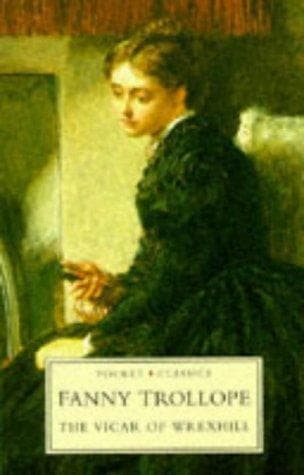
Clergy -- Fiction; Great Britain -- Fiction; Religious fiction
It was probably not so much the failing to keep his promise with
Corbold, which the late hour might readily excuse, as the displaying to
his slave and curate that his power was not absolute, which galled him
so severely. His wife and cousin, however, soon returned; they both
looked placidly contented, as those do look, who, having had important
business to transact, have done it well and thoroughly. Soon afterwards
the numerous household were summoned to appear, and the labours of the
day were closed with prayer, Mr. Hetherington uttering the extempore
invocation, and the vicar pronouncing the blessing: an arrangement, by
the way, approved by the master of Cartwright Park for three especial
reasons. First, it gave to his establishment very greatly the effect of
having a domestic chaplain at its head.
Secondly, it afforded an opportunity, which the worthy Mr. Hetherington
never neglected, of calling down sundry especial blessings on the
vicar's own particular head, and, which was perhaps more important
still, of pronouncing a lofty eulogium on his transcendent virtues.
Thirdly, the having to rise from his knees and pronounce the final
blessing, never failed to soothe his spirit with a delicious foreboding
that he might one day do so likewise in his own cathedral, and from his
own proper throne: this being an object of ambition to him as dear, or
dearer still, than the possession of the precious will itself.
Rarely indeed did he seat himself in his own soft chair, in his own
noble library, without seeing in his mind's eye a mitre, as distinctly
visible as Macbeth's air-drawn dagger was to him; and the hope that this
crowning blessing would one day fall upon his favoured head, not only
cheered every waking, and often every sleeping hour, but made him so
generously come forward upon all occasions when a penniless Whig was to
be accommodated with a seat in a Parliament, or any other subscription
set on foot to help the radical poor and needy into political power and
place, that he was already considered in the high places as one of the
most conscientious and right-minded clergymen within the pale of the
Established Church, and almost supernaturally gifted (considering he was
not a Roman Catholic priest) with the power of judging political
characters according to their real value.
As soon as the prayers were ended, the blessing spoken, and the servants
dismissed, Mr. Corbold, whose eyes had vainly wandered round the room in
search of Helen, approached the vicar, and said in a very firm and
intelligible tone, "I wish to speak to you, cousin Cartwright."
"Certainly!" replied his kinsman in a voice of the most cordial
friendship. "Come into my library with me, cousin Stephen."
And into the library they went; and almost before the door was shut, Mr.
Corbold exclaimed, "How am I to see Miss Helen, cousin Cartwright, if
you have let her take herself off to bed?"
This very pertinent question was, however, only answered by another.
Public-domain text, read in full here on John Shaqi.
Reviews
Reviews
No reviews yet
Be the first to share your thoughts on this work.
Elsewhere in the archive
Join the Discussion
Join the discussion
Sign in to leave a comment or review.
Sign InorCreate an account