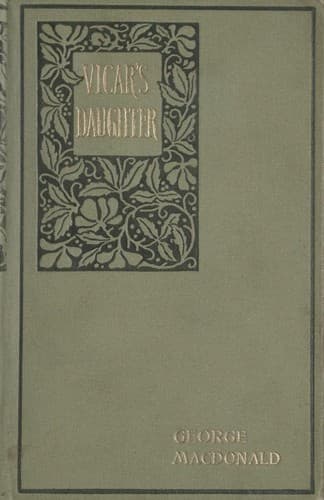
Children of clergy -- Fiction; Christian fiction; Fathers and daughters -- Fiction; Scotland -- Fiction
"I should have said, on the contrary," interposed Mr. Blackstone,
addressing Mr. Morley, "if you do less--for more you cannot do--you will
produce no effect whatever."
"We have no right to make it a condition of our obedience, that we shall
see its reflex in the obedience of others," said Miss Clare. "We have to
pull out the beam, not the mote."
"Are you not, then, to pull the mote out of your brother's eye?" said Judy.
"In no case and on no pretence, _until_ you have pulled the beam out of
your own eye," said Mr. Blackstone; "which I fancy will make the duty of
finding fault with one's neighbor a rare one; for who will venture to say
he has qualified himself for the task?"
It was no wonder that a silence followed upon this; for the talk had got to
be very serious for a dinner-table. Lady Bernard was the first to speak. It
was easier to take up the dropped thread of the conversation than to begin
a new reel.
"It cannot be denied," she said, "whoever may be to blame for it, that the
separation between the rich and the poor has either been greatly widened of
late, or, which involves the same practical necessity, we have become more
aware of the breadth and depth of a gulf which, however it may distinguish
their circumstances, ought not to divide them from each other. Certainly
the rich withdraw themselves from the poor. Instead, for instance, of
helping them to bear their burdens, they leave the still struggling poor of
whole parishes to sink into hopeless want, under the weight of those who
have already sunk beyond recovery. I am not sure that to shoot them would
not involve less injustice. At all events, he that hates his brother is a
murderer."
"But there is no question of hating here," objected Mr. Morley.
"I am not certain that absolute indifference to one's neighbor is not as
bad. It came pretty nearly to the same thing in the case of the priest and
the Levite, who passed by on the other side," said Mr. Blackstone.
"Still," said Mr. Morley, in all the self-importance of one who prided
himself on the practical, "I do not see that Miss Clare has proposed any
remedy for the state of things concerning the evil of which we are all
agreed. What is to be _done_? What can _I_ do now? Come, Miss Clare."
Miss Clare was silent.
"Marion, my child," said Lady Bernard, turning to her, "will you answer Mr.
Morley?"
"Not, certainly, as to what _he_ can do: that question I dare not undertake
to answer. I can only speak of what principles I may seem to have
discovered. But until a man begins to behave to those with whom he comes
into personal contact as partakers of the same nature, to recognize, for
instance, between himself and his trades-people a bond superior to that of
supply and demand, I cannot imagine how he is to do any thing towards the
drawing together of the edges of the gaping wound in the social body."
Public-domain text, read in full here on John Shaqi.
Reviews
Reviews
No reviews yet
Be the first to share your thoughts on this work.
Elsewhere in the archive
Join the Discussion
Join the discussion
Sign in to leave a comment or review.
Sign InorCreate an account