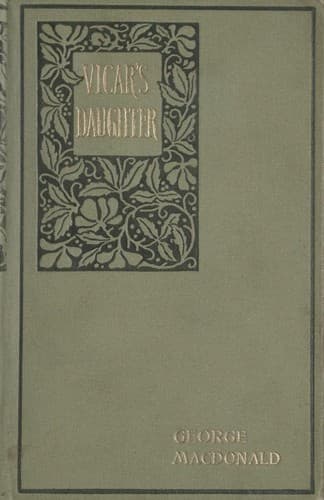
Children of clergy -- Fiction; Christian fiction; Fathers and daughters -- Fiction; Scotland -- Fiction
She belonged to one of the principal gypsy families in this country. The
fact that they had no settled habitation, but lived in tents, like Abraham
and Isaac, had nothing to do with poverty. The silver buttons on her
father's coat, were, she said, worth nearly twenty pounds; and when a
friend of any distinction came to tea with them, they spread a table-cloth
of fine linen on the grass, and set out upon it the best of china, and a
tea-service of hall-marked silver. She said her friends--as much as any
gentleman in the land--scorned stealing; and affirmed that no real gypsy
would "risk his neck for his belly," except he were driven by hunger. All
her family could read, she said, and carried a big Bible about with them.
One summer they were encamped for several months in the neighborhood of
Edinburgh, making horn-spoons and baskets, and some of them working in tin.
There they were visited by a clergyman, who talked and read the Bible to
them, and prayed with them. But all their visitors were not of the same
sort with him. One of them was a young fellow of loose character, a clerk
in the city, who, attracted by her appearance, prevailed upon her to meet
him often. She was not then eighteen. Any aberration from the paths of
modesty is exceedingly rare among the gypsies, and regarded with severity;
and her father, hearing of this, gave her a terrible punishment with the
whip he used in driving his horses. In terror of what would follow when the
worst came to be known, she ran away; and, soon forsaken by her so-called
lover, wandered about, a common vagrant, until her baby was born--under the
stars, on a summer night, in a field of long grass.
For some time she wandered up and down, longing to join some tribe of her
own people, but dreading unspeakably the disgrace of her motherhood. At
length, having found a home for her child, she associated herself with a
gang of gypsies of inferior character, amongst whom she had many hardships
to endure. Things, however, bettered a little after one of their number
was hanged for stabbing a cousin, and her position improved. It was not,
however, any intention of carrying off her child to share her present lot,
but the urgings of mere mother-hunger for a sight of her, that drove her
to the Hall. When she had succeeded in enticing her out of sight of the
house, however, the longing to possess her grew fierce; and braving all
consequences, or rather, I presume, unable to weigh them, she did carry her
away. Foiled in this attempt, and seeing that her chances of future success
in any similar one were diminished by it, she sought some other plan.
Learning that one of the family was married, and had removed to London,
she succeeded, through gypsy acquaintances who lodged occasionally near
Tottenham Court Road, in finding out where we lived, and carried off Ethel
with the vague intent, as we had rightly conjectured, of using her as a
means for the recovery of her own child.
Public-domain text, read in full here on John Shaqi.
Reviews
Reviews
No reviews yet
Be the first to share your thoughts on this work.
Elsewhere in the archive
Join the Discussion
Join the discussion
Sign in to leave a comment or review.
Sign InorCreate an account