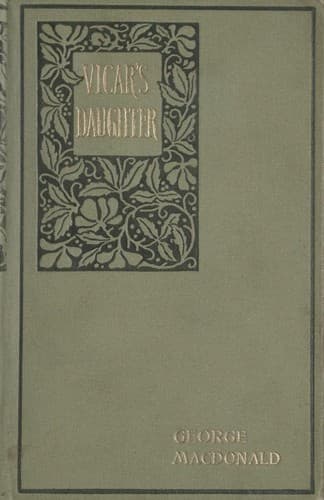
Children of clergy -- Fiction; Christian fiction; Fathers and daughters -- Fiction; Scotland -- Fiction
Before long it became evident that her old habits were working in her and
making her restless. She was pining after the liberty of her old wandering
life, with sun and wind, space and change, all about her. It was spring;
and the reviving life of nature was rousing in her the longing for motion
and room and variety engendered by the roving centuries which had passed
since first her ancestors were driven from their homes in far Hindostan.
But my father had foreseen the probability, and had already thought over
what could be done for her if the wandering passion should revive too
powerfully. He reasoned that there was nothing bad in such an impulse,--one
doubtless, which would have been felt in all its force by Abraham himself,
had he quitted his tents and gone to dwell in a city,--however much its
indulgence might place her at a disadvantage in the midst of a settled
social order. He saw, too, that any attempt to coerce it would probably
result in entire frustration; that the passion for old forms of freedom
would gather tenfold vigor in consequence. It would be far better to favor
its indulgence, in the hope that the love of her child would, like an
elastic but infrangible cord, gradually tame her down to a more settled
life.
He proposed, therefore, that she should, as a matter of duty, go and visit
her parents, and let them know of her welfare. She looked alarmed.
"Your father will show you no unkindness, I am certain, after the lapse of
so many years," he added. "Think it over, and tell me to-morrow how you
feel about it. You shall go by train to Edinburgh, and once there you will
soon be able to find them. Of course you couldn't take the child with you;
but she will be safe with us till you come back."
The result was that she went; and having found her people, and spent a
fortnight with them, returned in less than a month. The rest of the year
she remained quietly at home, stilling her desires by frequent and long
rambles with her child, in which Mr. Wagtail always accompanied them. My
father thought it better to run the risk of her escaping, than force the
thought of it upon her by appearing not to trust her. But it came out that
she had a suspicion that the dog was there to prevent, or at least expose,
any such imprudence. The following spring she went on a second visit to her
friends, but was back within a week, and the next year did not go at all.
Meantime my father did what he could to teach her, presenting every truth
as something it was necessary she should teach her child. With this duty,
he said, he always baited the hook with which he fished for her; "or, to
take a figure from the old hawking days, her eyas is the lure with which I
would reclaim the haggard hawk."
What will be the final result, who dares prophesy? At my old home she
still resides; grateful, and in some measure useful, idolizing, but not
altogether spoiling her child, who understands the relation between them,
and now calls her mother.
Public-domain text, read in full here on John Shaqi.
Reviews
Reviews
No reviews yet
Be the first to share your thoughts on this work.
Elsewhere in the archive
Join the Discussion
Join the discussion
Sign in to leave a comment or review.
Sign InorCreate an account