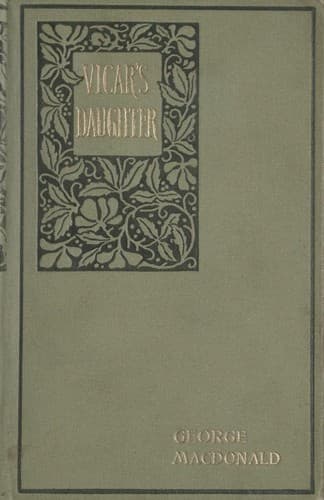
Children of clergy -- Fiction; Christian fiction; Fathers and daughters -- Fiction; Scotland -- Fiction
The carriage was put down, the butler, one of the footmen, and the lady's
maid, were dismissed, and household arrangements fitted to a different
scale.
One consequence of this chastisement, as of the preceding, was, that the
whole family drew yet more closely and lovingly together; and I must say
for Judy, that, after a few weeks of what she called poverty, her spirits
seemed in no degree the worse for the trial.
At Marion's earnest entreaty no one told either Mr. or Mrs. Morley of the
share she had had in saving his credit and social position. For some time
she suffered from doubt as to whether she had had any right to interpose in
the matter, and might not have injured Mr. Morley by depriving him of the
discipline of poverty; but she reasoned with herself, that, had it been
necessary for him, her efforts would have been frustrated; and reminded
herself, that, although his commercial credit had escaped, it must still be
a considerable trial to him to live in reduced style.
But that it was not all the trial needful for him, was soon apparent; for
his favorite Amy began to pine more rapidly, and Judy saw, that, except
some change speedily took place, they could not have her with them long.
The father, however, refused to admit the idea that she was in danger. I
suppose he felt as if, were he once to allow the possibility of losing
her, from that moment there would be no stay between her and the grave: it
would be a giving of her over to death. But whatever Dr. Brand suggested
was eagerly followed. When the chills of autumn drew near, her mother took
her to Ventnor; but little change followed, and before the new year she
was gone. It was the first death, beyond that of an infant, they had had
in their family, and took place at a time when the pressure of business
obligations rendered it impossible for her father to be out of London: he
could only go to lay her in the earth, and bring back his wife. Judy had
never seen him weep before. Certainly I never saw such a change in a man.
He was literally bowed with grief, as if he bore a material burden on
his back. The best feelings of his nature, unimpeded by any jar to his
self-importance or his prejudices, had been able to spend themselves on the
lovely little creature; and I do not believe any other suffering than the
loss of such a child could have brought into play that in him which was
purely human.
He was at home one morning, ill for the first time in his life, when Marion
called on Judy. While she waited in the drawing-room, he entered. He turned
the moment he saw her, but had not taken two steps towards the door, when
he turned again, and approached her. She went to meet him. He held out his
hand.
"She was very fond of you, Miss Clare," he said. "She was talking about you
the very last time I saw her. Let by-gones be by-gones between us."
"I was very rough and rude to you, Mr. Morley, and I am very sorry," said
Marion.
Public-domain text, read in full here on John Shaqi.
Reviews
Reviews
No reviews yet
Be the first to share your thoughts on this work.
Elsewhere in the archive
Join the Discussion
Join the discussion
Sign in to leave a comment or review.
Sign InorCreate an account