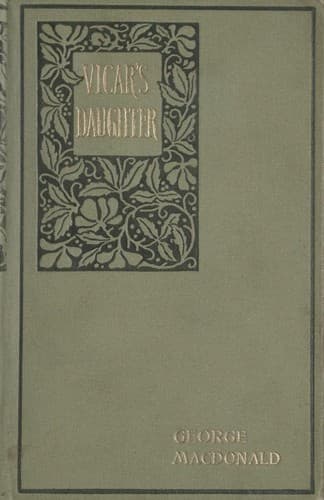
Children of clergy -- Fiction; Christian fiction; Fathers and daughters -- Fiction; Scotland -- Fiction
"Thank you. Then we are friends again. And now I do think I am entitled
to a picture,--at least, I think it will be pardonable if I yield to the
_very_ strong temptation I am under at this moment to buy one. Let me see:
what have you in the slave-market, as your wife calls it?"
She bought "The Street Musician," as Percivale had named the picture taken
from Dr. Donne. I was more miserable than I ought to have been when I found
he had parted with it, but it was a great consolation to think it was to
Lady Bernard's it had gone. She was the only one, except my mother or Miss
Clare, I could have borne to think of as having become its possessor.
He had asked her what I thought a very low price for it; and I judge that
Lady Bernard thought the same, but, after what had passed between them,
would not venture to expostulate. With such a man as my husband, I fancy,
she thought it best to let well alone. Anyhow, one day soon after this, her
servant brought him a little box, containing a fine brilliant.
"The good lady's kindness is long-sighted," said my husband, as he placed
it on his finger. "I shall be hard up, though, before I part with this.
Wynnie, I've actually got a finer diamond than Mr. Baddeley! It _is_ a
beauty, if ever there was one!"
My husband, with all his carelessness of dress and adornment, has almost a
passion for stones. It is delightful to hear him talk about them. But he
had never possessed a single gem before Lady Bernard made him this present.
I believe he is child enough to be happier for it all his life.
CHAPTER XXXVI.
RETROSPECTIVE.
Suddenly I become aware that I am drawing nigh the close of my monthly
labors for a long year. Yet the year seems to have passed more rapidly
because of this addition to my anxieties. Not that I haven't enjoyed the
labor while I have been actually engaged in it, but the prospect of the
next month's work would often come in to damp the pleasure of the present;
making me fancy, as the close of each chapter drew near, that I should not
have material for another left in my head. I heard a friend once remark
that it is not the cares of to-day, but the cares of to-morrow, that weigh
a man down. For the day we have the corresponding strength given, for the
morrow we are told to trust; it is not ours yet.
When I get my money for my work, I mean to give my husband a long holiday.
I half think of taking him to Italy,--for of course I can do what I like
with my own, whether husband or money,--and so have a hand in making him a
still better painter. Incapable of imitation, the sight of any real work
is always of great service to him, widening his sense of art, enlarging
his idea of what can be done, rousing what part of his being is most in
sympathy with it,--a part possibly as yet only half awake; in a word,
leading him another step towards that simplicity which is at the root of
all diversity, being so simple that it needs all diversity to set it forth.
Public-domain text, read in full here on John Shaqi.
Reviews
Reviews
No reviews yet
Be the first to share your thoughts on this work.
Elsewhere in the archive
Join the Discussion
Join the discussion
Sign in to leave a comment or review.
Sign InorCreate an account