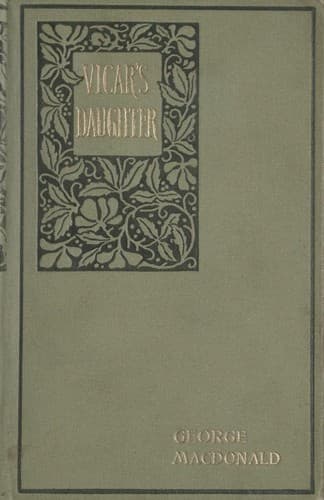
Children of clergy -- Fiction; Christian fiction; Fathers and daughters -- Fiction; Scotland -- Fiction
What still makes me shrink the most is the recollection of how often I have
condemned, as too silly to repeat, things which reporting mothers evidently
regarded as proofs of a stupendous intellect. But the folly of these
constitutes the chief part of their merit; and I do not see how I can be
mistaken for supposing them clever, except it be in regard of a glimmer of
purpose now and then, and the occasional manifestation of the cunning of
the stump orator, with his subterfuges to conceal his embarrassment when he
finds his oil failing him, and his lamp burning low.
CHAPTER XL.
CHILD NONSENSE.
One word of introductory explanation.
During my husband's illness, Marion came often, but, until he began to
recover, would generally spend with the children the whole of the time she
had to spare, not even permitting me to know that she was in the house. It
was a great thing for them; for, although they were well enough cared for,
they were necessarily left to themselves a good deal more than hitherto.
Hence, perhaps, it came that they betook themselves to an amusement not
uncommon with children, of which I had as yet seen nothing amongst them.
One evening, when my husband had made a little progress towards recovery,
Marion came to sit with me in his room for an hour.
"I've brought you something I want to read to you," she said, "if you think
Mr. Percivale can bear it."
I told her I believed he could, and she proceeded to explain what it was.
"One morning, when I went into the nursery, I found the children playing at
church, or rather at preaching; for, except a few minutes of singing, the
preaching occupied the whole time. There were two clergymen, Ernest and
Charles, alternately incumbent and curate. The chief duty of the curate for
the time being was to lend his aid to the rescue of his incumbent from any
difficulty in which the extemporaneous character of his discourse might
land him."
I interrupt Marion to mention that the respective ages of Ernest and
Charles were then eight and six.
Public-domain text, read in full here on John Shaqi.
Reviews
Reviews
No reviews yet
Be the first to share your thoughts on this work.
Elsewhere in the archive
Join the Discussion
Join the discussion
Sign in to leave a comment or review.
Sign InorCreate an account