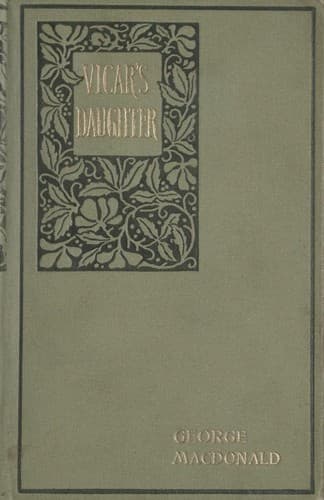
Children of clergy -- Fiction; Christian fiction; Fathers and daughters -- Fiction; Scotland -- Fiction
"No one has mentioned your name to me, Roger. I only guessed it from what
Marion said when I questioned her about her sad looks."
"Her sad looks?"
"Yes."
"What did she say?" he asked eagerly.
"She only confessed she had had something to trouble her, and said she
hoped it would be over soon."
"I dare say!" returned Roger dryly, looking gratified, however, for a
moment.
My reader may wonder that I should compromise Marion, even so far as to
confess that she was troubled; but I could not bear that Roger should think
she had been telling his story to me. Every generous woman feels that she
owes the man she refuses at least silence; and a man may well reckon upon
that much favor. Of all failures, why should this be known to the world?
The relief of finding she had not betrayed him helped him, I think, to open
his mind: _he_ was under no obligation to silence.
"You see, Wynnie," he said, with pauses, and puffs at his pipe, "I don't
mean I'm a fool for falling in love with Marion. Not to have fallen in love
with her would have argued me a beast. Being a man, it was impossible for
me to help it, after what she's been to me. But I was worse than a fool
to open my mouth on the subject to an angel like her. Only there again, I
couldn't, that is, I hadn't the strength to help it. I beg, however, you
won't think me such a downright idiot as to fancy myself worthy of her. In
that case, I should have deserved as much scorn as she gave me kindness. If
you ask me how it was, then, that I dared to speak to her on the subject, I
can only answer that I yielded to the impulse common to all kinds of love
to make itself known. If you love God, you are not content with his knowing
it even, but you must tell him as if he didn't know it. You may think from
this cool talk of mine that I am very philosophical about it; but there are
lulls in every storm, and I am in one of those lulls, else I shouldn't be
sitting here with you."
"Dear Roger!" I said, "I am very sorry for your disappointment. Somehow, I
can't be sorry you should have loved"--
"_Have loved!_" he murmured.
"_Should love_ Marion, then," I went on. "That can do you nothing but good,
and in itself must raise you above yourself. And how could I blame you,
that, loving her, you wanted her to know it? But come, now, if you can
trust me, tell me all about it, and especially what she said to you. I
dare not give you any hope, for I am not in her confidence in this matter;
and it is well that I am not, for then I might not be able to talk to you
about it with any freedom. To confess the real truth, I do not see much
likelihood, knowing her as I do, that she will recall her decision."
Public-domain text, read in full here on John Shaqi.
Reviews
Reviews
No reviews yet
Be the first to share your thoughts on this work.
Elsewhere in the archive