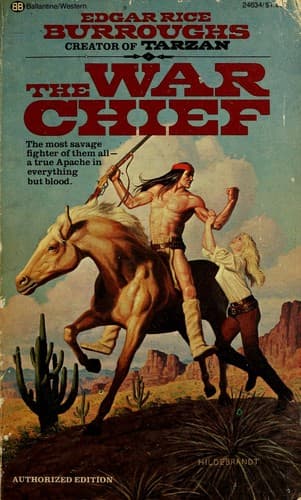
Apache Indians -- Fiction; Historical fiction; Western stories
“Geronimo is right,” replied Shoz-Dijiji. “There is no hope. They have
taken our land from us; they have taken the game we hunted that we might
live; but one thing they cannot take from us—the right to die and to
choose the manner of our dying. I, Shoz-Dijiji, choose to die fighting
the pindah lickoyee. I shall go out upon the war trail with Na-chi-ta
and the Cho-kon-en. I have spoken.”
“You have spoken well, my son. You are a young man. Young men should
fight. Geronimo is old and tired and very sad. He would rather lay down
his weapons and rest.”
Great was the activity in the camp of the Cho-kon-en when Shoz-Dijiji
returned accompanied by Gian-nah-tah and several of the other younger
braves of the Be-don-ko-he. Chief Co-si-to was there with a band of his
Chi-e-a-hen warriors; but there was disappointment in the voice of
Na-chi-ta when he told that the other tribes had refused to join them.
Nan-ta-do-tash headed the izze-nantans who were preparing big medicine
for use against the enemy, and with his own hands he prepared a
phylactery for Shoz-Dijiji, calling down many blessings upon it.
The feast and the war dance aroused the braves to the highest pitch of
excitement, to which the women added by their savage denunciation of the
enemy and their demands upon their braves to go forth like men and slay
the hated white-eyes; and when the dance was over the squaws accompanied
the war party for several miles out of camp toward the point the chiefs
had chosen for attack upon the morrow.
CHAPTER XIX
WHITE AND RED
IN a ranch house on the banks of the Gila, between Fort Thomas and the
San Carlos Indian Agency, Wichita Billings awoke early on a beautiful,
bright April morning.
She had ridden down from Thomas on the previous day with a Signal Corps
detachment that was repairing the line of government telegraph, for a
day’s visit with the wife of the rancher. Tomorrow they would be back
and she would return to the post with them.
Hearing her hostess already in the kitchen the girl dressed quickly and
joined her. It was very early, yet already the rancher and his men were
busy with the feeding and the chores. The daily life of the ranch had
commenced, as it always did, in the cool of the morning, for one soon
learns to take advantage of any respite from the intense heat of
Arizona’s middays.
Molly Pringe hummed a gay song as she fed sticks of cottonwood to the
hungry range while Chita stirred the buckwheat batter. The odor of
coffee and frying bacon was in the air. The women chatted as they
worked. There was a great chirping of birds among the foliage of the two
trees that shaded the front of the house. Later in the day would come
heat and silence.
Public-domain text, read in full here on John Shaqi.
Reviews
Reviews
No reviews yet
Be the first to share your thoughts on this work.
Elsewhere in the archive
Join the Discussion
Join the discussion
Sign in to leave a comment or review.
Sign InorCreate an account