Air warfare -- Fiction; Science fiction; War stories
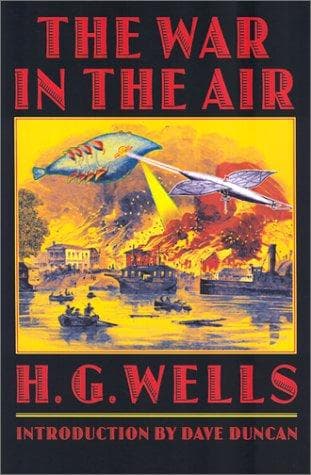
In this manner the massacre of New York began. She was the first of the
great cities of the Scientific Age to suffer by the enormous powers
and grotesque limitations of aerial warfare. She was wrecked as in the
previous century endless barbaric cities had been bombarded, because she
was at once too strong to be occupied and too undisciplined and proud to
surrender in order to escape destruction. Given the circumstances, the
thing had to be done. It was impossible for the Prince to desist, and
own himself defeated, and it was impossible to subdue the city except
by largely destroying it. The catastrophe was the logical outcome of
the situation, created by the application of science to warfare. It
was unavoidable that great cities should be destroyed. In spite of his
intense exasperation with his dilemma, the Prince sought to be moderate
even in massacre. He tried to give a memorable lesson with the minimum
waste of life and the minimum expenditure of explosives. For that night
he proposed only the wrecking of Broadway. He directed the air-fleet to
move in column over the route of this thoroughfare, dropping bombs, the
Vaterland leading. And so our Bert Smallways became a participant in one
of the most cold-blooded slaughters in the world's history, in which
men who were neither excited nor, except for the remotest chance of
a bullet, in any danger, poured death and destruction upon homes and
crowds below.
He clung to the frame of the porthole as the airship tossed and swayed,
and stared down through the light rain that now drove before the wind,
into the twilight streets, watching people running out of the houses,
watching buildings collapse and fires begin. As the airships sailed
along they smashed up the city as a child will shatter its cities of
brick and card. Below, they left ruins and blazing conflagrations and
heaped and scattered dead; men, women, and children mixed together as
though they had been no more than Moors, or Zulus, or Chinese. Lower
New York was soon a furnace of crimson flames, from which there was no
escape. Cars, railways, ferries, all had ceased, and never a light lit
the way of the distracted fugitives in that dusky confusion but the
light of burning. He had glimpses of what it must mean to be down
there--glimpses. And it came to him suddenly as an incredible discovery,
that such disasters were not only possible now in this strange,
gigantic, foreign New York, but also in London--in Bun Hill! that the
little island in the silver seas was at the end of its immunity, that
nowhere in the world any more was there a place left where a Smallways
might lift his head proudly and vote for war and a spirited foreign
policy, and go secure from such horrible things.
CHAPTER VII. THE “VATERLAND” IS DISABLED
1
Public-domain text, read in full here on John Shaqi.
Reviews
Reviews
No reviews yet
Be the first to share your thoughts on this work.
Elsewhere in the archive
Join the Discussion
Join the discussion
Sign in to leave a comment or review.
Sign InorCreate an account