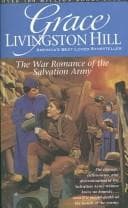
The War Romance of the Salvation ArmyHill, Grace Livingston
History
The War Romance of the Salvation Army
Hill, Grace Livingston
World War, 1914-1918 -- War work -- Salvation Army
A portion of one troop ship had been reserved for soldiers having
influenza. These men were kept on board long after all the others had
left the ship. A Salvation Army worker seeing them with the white masks
over their faces went on board and served them with chocolate,
distributing post cards and telegraph blanks. When she was leaving the
ship a Captain said to her rather brusquely: “Don’t you realize that
you have done a foolish thing? Those men have influenza and your
serving them might mean your death!”
Looking up into the man’s eyes the Salvationist said: “I am ready to
die if God sees fit to call me.”
The officer laughed and told her that was the first time in his life he
had known anyone to say they were ready to die and would willingly
expose themselves to such a contagious disease.
“Aren’t you ready to die?” asked the girl. “Certainly not,” replied the
Captain. “Sometimes I think I am hardly fit to live, much less die.”
“Don’t you realize that there is a Power which can enable you to live
in such a way as to make you ready to die?”
“Oh, well, I don’t bother about going to church, in fact, I don’t
bother about religion at all, although I must say once or twice when I
was up the line over there I wished I did know something about
religion, that is, the kind that makes a fellow feel good about dying;
but I don’t want to go to church and go through all that business.”
“It is possible to accept Christ here and now on this very spot—on this
ship—if you’ll only believe,” said the girl wistfully.
The Captain could not help being interested and thoughtful. When she
left, after a little more talk he put out his hand and said:
“Thank you. You’ve done me more good than any sermon could have done
me, and believe me, I am going to pray and trust God to help me live a
different life.”
Sad things are seen on the docks at times when the ships come into
port, and the boys are coming home.
A soldier in a basket, with both arms and both legs gone and only one
eye, was being carried tenderly along.
“Why do you let him live?” asked one pityingly of the Commanding
Officer.
The gruff, kindly voice replied:
“You don’t know what life is. We don’t live through our arms and legs.
We live through our hearts.”
Some of our boys have learned out there amid shell fire to live through
their hearts.
One of these lying on a litter greeted the lassie from Indiana, just
come back to New York from France to meet the boys when they landed:
“Hello, Sister! _You here?_”
Her eyes filled with tears as she recognized one of her old friends of
the trenches, and noticed how helpless he was now, he who had been the
strongest of the strong. She murmured sympathetically some words of
attempted cheer:
Public-domain text, read in full here on John Shaqi.
Reviews
Reviews
No reviews yet
Be the first to share your thoughts on this work.
Elsewhere in the archive
Join the Discussion
Join the discussion
Sign in to leave a comment or review.
Sign InorCreate an account