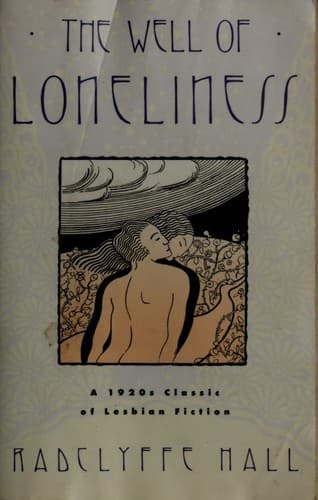
Lesbians -- England -- Social conditions -- Fiction
That summer they drove into Italy with David sitting up proudly beside
Burton. David barked at the peasants and challenged the dogs and
generally assumed a grand air of importance. They decided to spend two
months on Lake Como, and went to the Hotel Florence at Bellagio. The
hotel gardens ran down to the lake—it was all very sunny and soothing
and peaceful. Their days were passed in making excursions, their
evenings in drifting about on the water in a little boat with a gaily
striped awning, which latter seemed a strange form of pleasure to David.
Many of the guests at the Florence were English, and not a few scraped
an acquaintance with Stephen, since nothing appears to succeed like
success in a world that is principally made up of failure. The sight of
her book left about in the lounge, or being devoured by some engrossed
reader, would make Stephen feel almost childishly happy; she would point
the phenomenon out to Mary.
‘Look,’ she would whisper, ‘that man’s reading my book!’ For the child
is never far to seek in the author.
Some of their acquaintances were country folk and she found that she was
in sympathy with them. Their quiet and painstaking outlook on life,
their love of the soil, their care for their homes, their traditions
were after all a part of herself, bequeathed to her by the founders of
Morton. It gave her a very deep sense of pleasure to see Mary accepted
and made to feel welcome by these grey-haired women and gentlemanly men;
very seemly and fitting it appeared to Stephen.
And now, since to each of us come moments of respite when the mind
refuses to face its problems, she resolutely thrust aside her
misgivings, those misgivings that whispered: ‘Supposing they knew—do
you think they’d be so friendly to Mary?’
Of all those who sought them out that summer, the most cordial were Lady
Massey and her daughter. Lady Massey was a delicate, elderly woman who,
in spite of poor health and encroaching years, was untiring in her
search for amusement—it amused her to make friends with celebrated
people. She was restless, self-indulgent and not over sincere, a
creature of whims and ephemeral fancies; yet for Stephen and Mary she
appeared to evince a liking which was more than just on the surface. She
would ask them up to her sitting-room, would want them to sit with her
in the garden, and would sometimes insist upon communal meals, inviting
them to dine at her table. Agnes, the daughter, a jolly, red-haired
girl, had taken an immediate fancy to Mary, and their friendship ripened
with celerity, as is often the way during idle summers. As for Lady
Massey she petted Mary, and mothered her as though she were a child, and
soon she was mothering Stephen also.
Public-domain text, read in full here on John Shaqi.
Reviews
Reviews
No reviews yet
Be the first to share your thoughts on this work.
Elsewhere in the archive
Join the Discussion
Join the discussion
Sign in to leave a comment or review.
Sign InorCreate an account