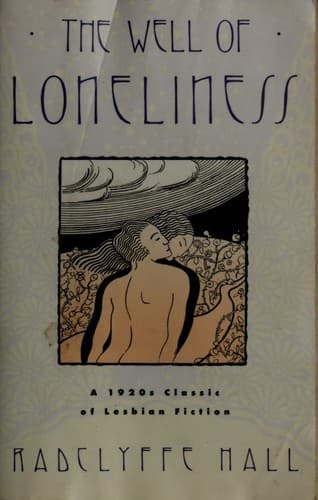
Lesbians -- England -- Social conditions -- Fiction
Until now they had never gone out much at night except to occasional
studio parties, or occasional cafés of the milder sort for a cup of
coffee with Barbara and Jamie; but that spring Mary seemed fanatically
eager to proclaim her allegiance to Pat’s miserable army. Deprived of
the social intercourse which to her would have been both natural and
welcome, she now strove to stand up to a hostile world by proving that
she could get on without it. The spirit of adventure that had taken her
to France, the pluck that had steadied her while in the Unit, the
emotional, hot-headed nature of the Celt, these things must now work
together in Mary to produce a state of great restlessness, a pitiful
revolt against life’s injustice. The blow struck by a weak and
thoughtless hand had been even more deadly than Stephen had imagined;
more deadly to them both, for that glancing blow coming at a time of
apparent success, had torn from them every shred of illusion.
Stephen, who could see that the girl was fretting, would be seized with
a kind of sick apprehension, a sick misery at her own powerlessness to
provide a more normal and complete existence. So many innocent
recreations, so many harmless social pleasures must Mary forego for the
sake of their union—and she still young, still well under thirty. And
now Stephen came face to face with the gulf that lies between warning
and realization—all her painful warnings anent the world had not served
to lessen the blow when it fell, had not served to make it more
tolerable to Mary. Deeply humiliated Stephen would feel, when she
thought of Mary’s exile from Morton, when she thought of the insults
this girl must endure because of her loyalty and her faith—all that
Mary was losing that belonged to her youth, would rise up at this time
to accuse and scourge Stephen. Her courage would flicker like a lamp in
the wind, and would all but go out; she would feel less steadfast, less
capable of continuing the war, that ceaseless war for the right to
existence. Then the pen would slip from her nerveless fingers, no longer
a sharp and purposeful weapon. Yes, that spring saw a weakening in
Stephen herself—she felt tired, and sometimes very old for her age, in
spite of her vigorous mind and body.
Calling Mary she would need to be reassured; and one day she asked her:
‘How much do you love me?’
Mary answered: ‘So much that I’m growing to hate . . .’ Bitter words to
hear on such young lips as Mary’s.
Public-domain text, read in full here on John Shaqi.
Reviews
Reviews
No reviews yet
Be the first to share your thoughts on this work.
Elsewhere in the archive
Join the Discussion
Join the discussion
Sign in to leave a comment or review.
Sign InorCreate an account