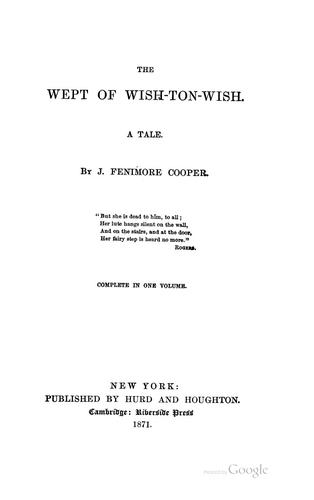
Historical fiction; King Philip's War, 1675-1676 -- Fiction; War stories
Through such a scene two men were industriously journeying, on the day
which succeeded the inroad last described. They marched as wont, one after
the other, the younger and more active leading the way through the
monotony of the woods, as accurately and as unhesitatingly as the mariner
directs his course by the aid of the needle over the waste of waters. He
in front was light, agile, and seemingly unwearied; while the one who
followed was a man of heavy mould, whose step denoted less practice in the
exercise of the forest, and possibly some failing of natural vigor.
"Thine eye, Narragansett, is an unerring compass by which to steer, and
thy leg a never-wearied steed;" said the latter, casting the butt of his
musket on the end of a mouldering log, while he leaned on the barrel for
support. "If thou movest on the war-path with the same diligence as thou
usest in our errand of peace, well may the Colonists dread thy enmity."
The other turned, and without seeking aid from the gun which rested
against his shoulder, he pointed at the several objects he named, and
answered--
"My father is this aged sycamore; it leans against the young
oak--Conanchet is a straight pine. There is great cunning in gray hairs,"
added the chief stepping lightly forward until a finger rested on the arm
of Submission; "can they tell the time when we shall lie under the moss
like a dead hemlock?"
"That exceedeth the wisdom of man. It is enough, Sachem, if when we fall,
we may say with truth, that the land we shadowed is no poorer for our
growth. Thy bones will lie in the earth where thy fathers trod, but mine
may whiten in the vault of some gloomy forest."
The quiet of the Indian's face was disturbed. The pupils of his dark eyes
contracted, his nostrils dilated, and his full chest heaved; and then all
reposed, like the sluggish ocean, after a vain effort to heave its waters
into some swelling wave, during a general calm.
"Fire hath scorched the prints of my father's moccasons from the earth,"
he said, with a smile that was placid though bitter, "and my eyes cannot
find them. I shall die under that shelter," pointing through an opening in
the foliage to the blue void; "the falling leaves will cover my bones."
"Then hath the Lord given us a new bond of friendship. There is a
yew-tree and a quiet church-yard in a country afar, where generations of
my race sleep in their graves. The place is white with stones, that bear
the name of----"
Submission suddenly ceased to speak, and when his eye was raised to that
of his companion, it was just in time to detect the manner in which the
curious interest of the latter changed suddenly to cold reserve, and to
note the high courtesy of the air with which the Indian turned the
discourse.
"There is water beyond the little hill," he said. "Let my father drink and
grow stronger, that he may live to lie in the clearings."
Public-domain text, read in full here on John Shaqi.
Reviews
Reviews
No reviews yet
Be the first to share your thoughts on this work.
Elsewhere in the archive
Join the Discussion
Join the discussion
Sign in to leave a comment or review.
Sign InorCreate an account