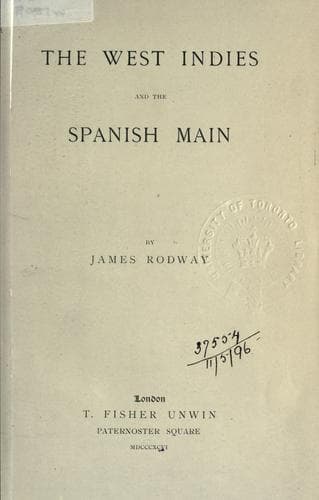
Slavery -- West Indies; Spanish Main; West Indies -- History
The Company was projected by the Earl of Oxford in 1711, and, like the
Mississippi scheme in France, was intended to assist the Government,
which was virtually bankrupt. As yet there was no funded national debt,
but large sums were owing to the army and navy, which had been
provisionally settled by debentures, that could be discounted only at a
serious loss to the owners. Down to the establishment of the Bank of
England in 1693 no public loan existed, but this was commenced by
borrowing the capital of that institution. At the peace of Ryswick, in
1697, the public debt amounted to twenty millions, but by the time the
South Sea Company was started the arrears of pay made it half as much
again. Part of the great scheme was to advance this amount on security
of English customs duties amounting to £600,000 per annum, and a
monopoly of the Spanish trade in the Indies as far as the _Assiento_
contract would permit.
Whether the whole affair was a fraud from the commencement is doubtful;
there were certainly misrepresentations in the prospectus, either wilful
or possibly in good faith. Spain was to allow free trade to England in
four ports on the Pacific, and three vessels besides slavers were to go
to the isthmus every year--concessions never promised nor intended by
Philip the Fifth. The slave trade was a fact, and according to the
statements it would give fabulous profits.
[Illustration: MAP OF TERRA FIRMA.
(_From Gottfried's "Reisen."_)]
Visions of boundless wealth now floated before the eyes of the English
people, and they at once began to rival the French in their madness, as
they had in their colonisation. The English Government was ready to make
every possible concession because it wanted to be rid of the incubus of
thirty millions, and therefore did nothing to check the Company. As the
stock was issued it was at once bought up, and then sold again at a
considerable advance. Everybody expected to make fortunes, therefore
they must get shares at any price. Rumours of peace with Spain, and
great concessions that would bring all the riches of Peru and Mexico
into their coffers, roused them still more. Gold would soon be as
plentiful as copper, and silver as iron. The shareholders would be the
richest people the world ever saw, and every share would give dividends
of hundreds per cent. per annum. The bill making the Government
concessions was passed in April, 1720, when the stock was quoted at £310
for a hundred pound share. Strange to say, it then began to fall, but
the projectors put forth a rumour that England was about to exchange
Gibraltar for a port in Peru, and confidence was restored at once. So
great was the increased demand that another million was issued at £300
per £100 share, and these were so much run after that the fortunate
owners were at once offered double what they had paid. Then another
million was offered at £400, and in a few hours applications were
received for a million and a half.
Public-domain text, read in full here on John Shaqi.
Reviews
Reviews
No reviews yet
Be the first to share your thoughts on this work.
Elsewhere in the archive
Join the Discussion
Join the discussion
Sign in to leave a comment or review.
Sign InorCreate an account