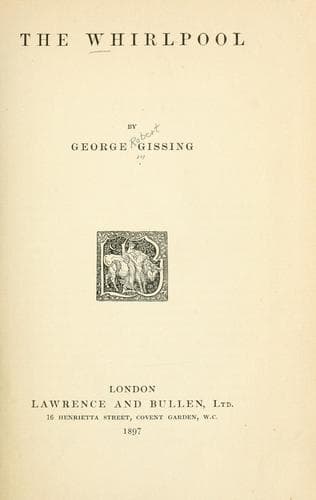
England -- Social life and customs -- 19th century -- Fiction; English fiction -- 19th century
'Pains him? That shows you don't understand us, dear Mamma. We could
neither of us possibly do anything that would pain the other. We are in
perfect harmony, yet absolutely independent. It has all been talked
over and settled. You must have misunderstood Harvey altogether.'
From this position Alma could not be moved, and Mrs. Frothingham, too
discreet to incur the risk of interference, spoke no more of the matter
as it concerned man and wife. But another objection she urged with
almost tearful earnestness. Did Alma forget that her appearance in
public would give occasion to most disagreeable forms of gossip? And
even if she disregarded the scandal of a few years ago, would not many
of her acquaintances say and believe that necessity had driven her into
a professional career?
'They may say what they like, and think what they like,' was Alma's
lofty reply. 'If artists had always considered such trivial
difficulties, where should we have been? Suppose gossip does its
worst--it's all over in a few months; then I stand by my own merit.
Dear Mamma, _don't_ be old fashioned! You look so young and so
charming--indeed you do--that I can't bear to hear you talk in that
early Victorian way. Art is art, and all these other things have
nothing whatever to do with it. There, it's all over. Be good, and
amuse yourself whilst you are with us. I assure you we are the most
reasonable and the happiest people living.'
Mrs. Frothingham smiled at the compliment to herself; then sighed, and
held her peace.
CHAPTER 10
So day by day Alma's violin sounded, and day after day Harvey heard it
with a growing impatience. As is commonly the case with people of
untrained ear, he had never much cared for this instrument; he
preferred the piano. Not long ago he would have thought it impossible
that he could ever come to dislike music, which throughout his life had
been to him a solace and an inspiration; but now he began to shrink
from the sound of it. As Alma practised in the morning, he was driven
at length to alter his habits, and to leave home after breakfast.
Having no other business, he went to Westminster Bridge Road, met Cecil
Morphew at the shop, watched the progress of alterations that seemed
advisable, picked up a little knowledge of photography, talked over
prices, advertisements, and numerous commercial matters of which he had
hitherto been contentedly ignorant. Before long, his loan to Morphew
was converted into an investment; he became a partner in the concern,
which, retaining the name of the old proprietor, they carried on as Den
bow & Co.
Public-domain text, read in full here on John Shaqi.
Reviews
Reviews
No reviews yet
Be the first to share your thoughts on this work.
Elsewhere in the archive
Join the Discussion
Join the discussion
Sign in to leave a comment or review.
Sign InorCreate an account