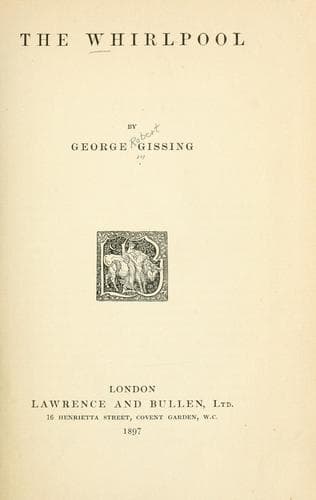
England -- Social life and customs -- 19th century -- Fiction; English fiction -- 19th century
'I am able to announce,' wrote Ego, 'and I think I shall be one of the
first to do so, that the brilliant composer, Mr. Felix Dymes, will
shortly vanish from the gay (if naughty) world of bachelorhood. I learn
on excellent authority that Mr. Dymes has quite recently become engaged
to Miss Lettice Almond, a very charming young lady, whose many gifts
(especially musical) have as yet been known only to a comparatively
small circle, and for the delightful reason that she is still only
eighteen. Miss Almond is the daughter of Mr. Haliburton Almond, senior
partner in the old and well-known firm of Almond Brothers, the
manufacturers of fireworks. She is an only daughter, and, though she
has two brothers, I may add (I trust without indiscretion) that the
title of heiress may be fittingly applied to her. The marriage may take
place in November, and will doubtless be a brilliant as well as a most
interesting affair. By-the-bye, Mr. Dymes's new opera is not likely to
be ready till next year, but some who have been privileged to hear the
parts already composed declare that it will surpass even "Blue Roses"
in the charm of sweet yet vivacious melody.'
When she had read and mused for more than an hour, Alma tore out the
two passages that had a personal interest for her, and put them in her
purse. The papers she left lying for anyone who chose to pick them up.
A fortnight later she was back at Gunnersbury; where, indeed, she would
have been content to stay all through the summer, had not Harvey and
the doctor insisted on her leaving home. All sorts of holidays had been
proposed, but nothing of the kind attracted her. She declared that she
was quite well, and that she preferred home to anywhere else; she had
got used to it, and did not wish to be unsettled. Six weeks at Penzance
simply wearied her; she brightened wonderfully on the day of return.
Harvey, always anxious, tried to believe that the great sorrow through
which she had passed was effecting only a natural change, subduing her
troublesome mutability of temper, and leading her to find solace in
domestic quietude.
On the third day after her return, she had lunched alone, and was
sitting in the library. Her dress, more elaborate than usual, and the
frequent glances which she cast at the clock, denoted expectation of
some arrival. Hearing a knock at the front door, she rose and waited
nervously.
'Mr. Dymes is in the drawing-room, mum.'
She joined him. Dymes, with wonted frankness, not to say impudence,
inspected her from head to foot, and did not try to conceal surprise.
'I was awfully glad to get your note. As I told you, I called here
about a month ago, and I should have called again. I didn't care to
write until I heard from you. You've been ill, I can see. I heard about
it. Awfully sorry.'
Public-domain text, read in full here on John Shaqi.
Reviews
Reviews
No reviews yet
Be the first to share your thoughts on this work.
Elsewhere in the archive
Join the Discussion
Join the discussion
Sign in to leave a comment or review.
Sign InorCreate an account