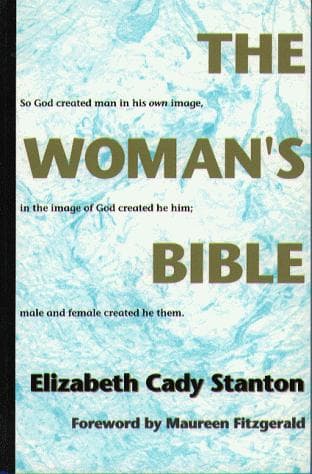
Bible -- Commentaries; Bible -- Feminist criticism; Women in the Bible
16 She considereth a field, and buyeth it: with the fruit of her hands
she planteth a vineyard.
20 She stretcheth out her hand to the poor.
21 She is not afraid of the snow; for all her household are clothed
with scarlet.
22 She maketh herself coverings of tapestry; her clothing is silk and
purple.
23 Her husband is known in the gates, when he sitteth among the elders
of the land.
24 She maketh fine linen, and selleth it.
26 She openeth her mouth with wisdom; and in her tongue is the law of
kindness.
28 Her children arise up, and call her blessed; her husband also, and
he praiseth her.
29 Many daughters have done virtuously, but thou excellest them all.
30 Favour is deceitful, and beauty is vain; but a woman that feareth
the Lord, shall be praised.
With these pen pictures of the foolish, contentious wife contrasted
with the more gracious woman, surely every reader of common sense will
try to follow the example of the latter. A complaining woman is worse
than a leaky house, because with paint and putty you can stop the
dropping; but how can one find the source of constant complaints?
Heretofore Biblical writers have given to us battles, laws, histories,
songs; now we have in Solomon's writings a new style in short,
epigrammatic sentences. The proverb was the most ancient way of
teaching among the Greeks. The seven wise men of Greece each had his
own motto on which he made himself famous. These were engraved on stone
in public places. Thus the gist of an argument or a long discussion may
be thrown into a proverb, in which the whole point will be easily seen
and remembered.
Solomon's idea of a wise woman, a good mother, a prudent wife, a
saving housekeeper and a successful merchant, will be found in the
foregoing texts, which every woman who reads should have printed,
framed and hung up at her family altar. As Solomon had a thousand women
in his household, he had great opportunity for the study of the
characteristics of the sex, though one would naturally suppose that
wise women, even in his day, preferred a larger sphere of action than
within his palace walls. Solomon's opinion of the sex in general is
plainly expressed in the foregoing texts.
Solomon is supposed to have written his Song when he was young,
Proverbs in middle life, and Ecclesiastes when he was old. He gave
admirable rules for wisdom and virtue to all classes, to men, to women
and to children, but failed to practise the lessons which he taught.
ECCLESIASTES.
This book, written in Solomon's old age, is by no means comforting or
inspiring. Everything in life seems to have been disappointing to him.
Wealth, position, learning, all earthly possessions and acquirements
he declares alike to be "vanity of vanities and
vexation of spirit." To one whose life has been useful to others and
sweet to himself, it is quite impossible to accept these pessimistic
pictures of human destiny.
Eccles. ii.
Public-domain text, read in full here on John Shaqi.
Reviews
Reviews
No reviews yet
Be the first to share your thoughts on this work.
Elsewhere in the archive
Join the Discussion
Join the discussion
Sign in to leave a comment or review.
Sign InorCreate an account