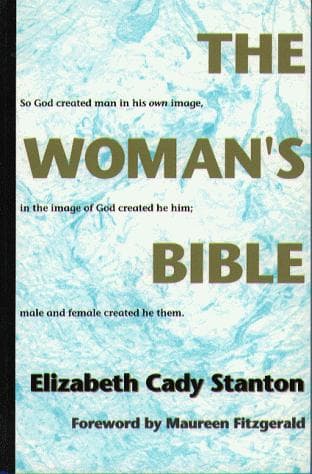
Bible -- Commentaries; Bible -- Feminist criticism; Women in the Bible
Moses spent the first forty years of his life in Egypt, the next forty
with Jethro his father in law, and the next forty wandering in the
wilderness. One writer said the Lord must have buried Moses, and no one
ever knew where. There is no record of the burial place of Moses. As
his life had been surrounded with mysteries, perhaps to verify his
providential guidance in that long journey in the wilderness, he chose
to surround his death also with mystery, and arranged with members of
the priesthood to keep his last resting place a profound secret. He was
well versed in all the law and mythology of the Egyptians, and intended
the people should no doubt think that Jehovah had taken the great
leader to himself. For the purpose of controlling his followers in that
long journey through the wilderness, he referred all his commands and
actions to Jehovah. Moses declared that he met him face to face on
Mount Sinai, veiled in a cloud of fire, received minute instructions
how to feed and conduct the people, as well as to minister to their
moral and spiritual necessities. In order to enforce his teachings, he
said the ten commandments were written on tablets of stone by Jehovah
himself, and given into his hands to convey to the people, with many
ordinances and religious observances, to be sacredly kept. In this way
the Jewish religion and the Mosaic code were established.
As these people had no written language at that time, and could
neither read nor write, they were fitting subjects for all manner of
delusions and superstitions. The question naturally suggests itself to
any rational mind, why should the customs and opinions of this ignorant
people, who lived centuries ago, have any influence in the religious
thought of this generation?
E. C. S.
CHAPTER II.
Exodus ii.
1 And there went a man of the house of Levi and took to wife a
daughter of Levi.
2 And the woman bare a son: and when she saw that he was a goodly
child, she hid him three months.
3 And when she could not longer hide him she took for him an ark of
bulrushes, and daubed it with slime and with pitch, and put the child
therein; and she laid it in the flags by the river's brink.
4 And his sister stood afar off, to wit what would be done to him.
5 And the daughter of Pharaoh came down to wash herself at the
river; and her maidens walked along by the river's side: and when she
saw the ark among the flags, she sent her maid to fetch it.
6 And when she had opened it, she saw the child: and, behold, the babe
wept. And she had compassion on him, and said, This is one of the
Hebrews' children.
7 Then said his sister to Pharaoh's daughter, Shall I go and call to
thee a nurse of the Hebrew women, that she may nurse the child for thee?
8 And Pharaoh's daughter said to her, Go. And the maid went and called
the child's mother.
9 And Pharaoh's daughter said unto her, Take this child away, and
nurse it for me, and I will give thee thy wages. And the woman took the
child, and nursed it.
Public-domain text, read in full here on John Shaqi.
Reviews
Reviews
No reviews yet
Be the first to share your thoughts on this work.
Elsewhere in the archive
Join the Discussion
Join the discussion
Sign in to leave a comment or review.
Sign InorCreate an account