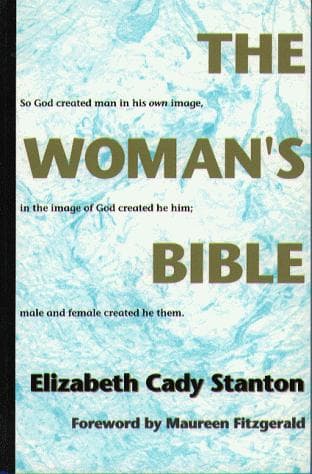
Bible -- Commentaries; Bible -- Feminist criticism; Women in the Bible
10 And the child grew, and she brought him unto Pharaoh's daughter,
and he became her son. And she called his name Moses: and she said,
Because I drew him out of the water.
15 But Moses fled from the face of Pharaoh, and dwelt in the land of
Midian: and he sat down by a well.
16 Now the priest of Midian had seven daughters: and they came and
drew water, and filled the troughs to water their father's flock.
17 And the shepherds came and drove them away: but Moses stood up and
helped them, and watered their flock.
18 And when they came to Reuel their father, he said, How is it that
ye are come so soon to day?
19 And they said, An Egyptian delivered us out of the hand of the
shepherds, and also drew water enough for us, and watered the flock.
20 And he said unto his daughters, And where is he? why is it that ye
have left the man? call him, that he may eat bread.
21 And Moses was content to dwell with the man: and he gave Moses
Zipporah his daughter.
22 And she bare him a son, and he called his name Gershon: for he
said, I have been a stranger in a strange land.
The account of the birth of Moses, his mother's anxiety in protecting
him from the wrath of Pharaoh, and the goodness of the king's daughter,
make altogether an interesting story, and is almost the first touch of
sentiment with which the historian has refreshed us; a pleasant change
from the continued accounts of corruption, violence, lust, war and
petty falsehood, that have thus far marked the history of this people.
The only value of these records to us is to show the character of the
Jewish nation, and make it easy for us to reject their ideas as to the
true status of woman, and their pretension of being guided by the hand
of God, in all their devious wanderings. Surely such teachings as
these, should have no influence in regulating the lives of women in the
nineteenth century. Moses' conduct towards the seven daughters of the
priest at the well, shows that there were some sparks of chivalry here
and there in a few representative souls, notwithstanding the contempt
for the sex in general. These Hebrew wooings and weddings were
curiously similar, alike marked for the beauty and simplicity of the
daughters of the land, the wells, the flocks, the handsome strangers,
the strong, active young men who will prove so helpful in cultivating
the lands. The father-in-law usually gets the young husband completely
under his thumb, and we hear nothing of the dreaded mother-in-law of
the nineteenth century. If we go through this chapter carefully we will
find mention of about a dozen women, but with the exception of one
given to Moses, all are nameless. Then as now names for women and
slaves are of no importance; they have no individual life, and why
should their personality require a life-long name? To-day the woman is
Mrs. Richard Roe, to-morrow Mrs. John Doe, and again Mrs. James Smith
according as she changes masters, and she has so little self-respect
Public-domain text, read in full here on John Shaqi.
Reviews
Reviews
No reviews yet
Be the first to share your thoughts on this work.
Elsewhere in the archive
Join the Discussion
Join the discussion
Sign in to leave a comment or review.
Sign InorCreate an account