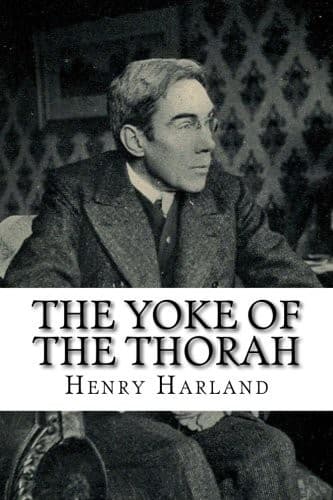
Jews -- Fiction; Man-woman relationships -- Fiction; New York (N.Y.) -- Fiction
Alone, Elias persistently fought shy of himself, persistently shunned
self-communion. He dared not open his eyes, and look himself squarely
in the face. He knew that it would not be an inspiriting spectacle. His
studio he had locked up, with the resolution never to touch his paints
any more forever. He sought to escape from himself in reading; and,
indeed, he read an astonishing multitude of books upon an astonishing
multitude of subjects. But now and then, in spite of his efforts to be
blind, the actual Elias Bacharach would loom up big before him, in all
his ghastly demoralization; and sick with self-loathing, he would bury
his face in his hands, and demand bitterly, impotently, why he had ever
been born? what single earthly purpose he was good for? why he could
not be abolished utterly forthwith? But these dark moods, or lucid
intervals, were commonly of short duration. He was generally able to
forget them in a novel. He watched his wedding-day draw near and nearer,
without the slightest quickening of the pulse. As I have said, he took
a certain insipid pleasure in the thought of his marriage. He fancied
it would be rather agreeable than otherwise to have Tillie a constant
inmate of his house. She would brighten it up, put a little electricity
into its atmosphere, relieve the excessive tedium of life in it. But
this pleasure was very mild indeed; the languid pleasure that one might
experience at the prospect of becoming the owner of a languidly admired
vase or piece of furniture. Yes, he was glad enough that it was going
to be his; but he did not care a great deal one way or the other; and as
the day approached which was to inaugurate his proprietorship, he felt
no flutter of the heart, no accession of eagerness or interest. Tillie's
excitement, on the contrary, intensified perceptibly. It had the effect
of beautifying her, and of civilizing her. With heightened color and
brightened eyes, she was an exceedingly pretty girl, one that any man
might have been proud of for his bride. Then, she did not talk half
so loudly as she had used to do; and her choice of words, phrases,
and figures, underwent a notable modification for the better. The
adjectives, _grand, ideal, elegant, fearful_, and such like, for
example, dropped almost entirely out of her daily speech.
Public-domain text, read in full here on John Shaqi.
Reviews
Reviews
No reviews yet
Be the first to share your thoughts on this work.
Elsewhere in the archive
Join the Discussion
Join the discussion
Sign in to leave a comment or review.
Sign InorCreate an account