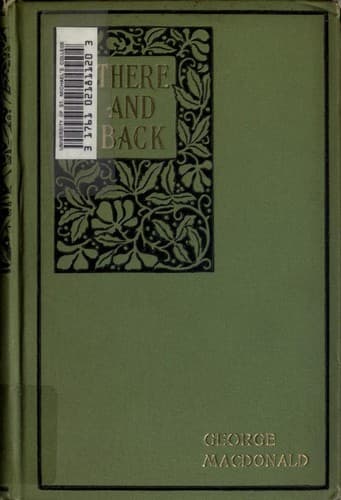
Christian fiction; Wingfold, Thomas (Fictitious character) -- Fiction
“Lady Ann,” she said, unconsciously drawing herself up to her full
little height, “I am sorry I gave you the trouble of sitting up to open
the door for me. _That_ at least shall not happen again. Good morning.”
“There is nothing to be annoyed at, Barbara. I am quite pleased with
what you have told me. I say only it was unwise of you not to let me
know.”
“It may not have been wise for my own sake, but it was for the woman's.”
“There is no occasion to say more about the woman; I am quite satisfied
with you, Barbara!” said lady Ann, looking up with an icy smile, her
last Parthian arrow.
“But I am not satisfied with you, lady Ann,” rejoined Barbara. “I have
submitted to be catechized because the thing took place while I was your
guest; but if such a thing were to happen again, I should do just the
same; therefore I have no right, understanding perfectly how much it
would displease you, to remain your guest. I ought, perhaps, to have
gone home instead of returning to you, but I thought that would be
uncivil, and look as if I were ashamed. My mother would never have
treated me as you have done! You may think her a strange woman, but her
heart is as big as her head--much bigger when it is full!”
It was not right of Barbara to get so angry, and answer lady Ann so
petulantly, for she knew her pretty well by this time, and yet was often
her guest. That it was impossible for such a girl to feel respect
for such a woman, if it accounts for her bearing to her, condemns the
familiarity that gave occasion to that bearing. At the same time, but
for lady Ann's superiority in age, Barbara would have spoken her mind
with yet greater freedom. Her rank made no halo about her in Barbara's
eyes.
Lady Ann took no more trouble to appease her: the foolish girl would,
she judged, be ashamed of herself soon, and accept the favour she knew
to be undeserved! Lady Ann understood Barbara no more than lady Ann
understood the real woman underlying lady Ann. She was not afraid of
losing Barbara, for she believed her parents could not but be strongly
in favour of an alliance with her family. She knew nothing of the
personal opposition between Mr. and Mrs. Wylder: she never opposed sir
Wilton except it was worth her while to do so; and sir Wilton never
opposed her at all--openly. It gave lady Ann no more pleasure to
go against her husband, than to comply with his wishes; and she had
anything but an adequate notion of the pleasure it gave sir Wilton to
see any desire of hers frustrated.
Barbara went to the stable, where man and boy had always his service in
his right hand ready for her--got Miss Brown saddled, and was away from
Mortgrange before Richard, early as he had begun, was half-way through
his morning's work.
She went to see Alice almost every day from that afternoon; and as no
one could resist Barbara, Alice's reserve, buttressed and bastioned
as it was with pain, soon began to yield before the live sympathy that
assailed it. They became fast friends.
Public-domain text, read in full here on John Shaqi.
Reviews
Reviews
No reviews yet
Be the first to share your thoughts on this work.
Elsewhere in the archive
Join the Discussion
Join the discussion
Sign in to leave a comment or review.
Sign InorCreate an account