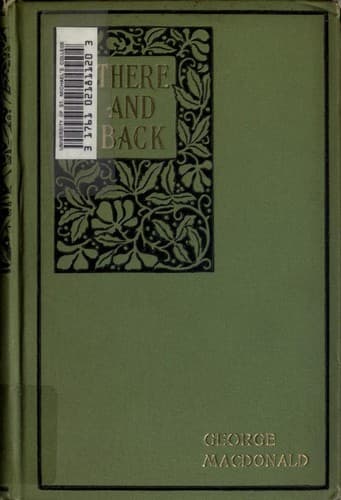
Christian fiction; Wingfold, Thomas (Fictitious character) -- Fiction
But his far worst sorrow was leaving Miss Wylder. That was a pain, a
keen pain in his heart. For, that a woman is miles above him, as a star
is above a marsh-light, is no reason why a man should not love her. Nay,
is it not the best of reasons for loving her? The higher in soul, and
the lowlier in position he is, the more imperative and unavoidable is it
that he should love her; and the absence of any thought in the direction
of marriage leaves but the wider room for the love infinite. In a
man capable of loving in such fashion, there are no bounds to the
possibilities, no limit to the growth of love. Richard thought his
soul was full, but a live soul can never be full; it is always growing
larger, and is always being filled.
“Like one that hath been stunned,” he went about his preparations for
departure.
“You will go by the first train in the morning,” said Arthur, happening
to meet him in the stable-yard, whither Richard had gone to look if Miss
Brown was in her usual stall. “I have told Robert to take you and your
tools to the station in the spring-cart.”
“Thank you, sir,” returned Richard; “I shall not require the cart.
I leave the house to-night, and shall send for my things to-morrow
morning. I have them almost ready now.”
“You cannot go to London to-night!”
“I am aware of that, sir.”
“Then where are you going? I wish to know.”
“That is my business, sir.”
“You have no cause to show temper,” said Arthur coldly.
“I should not have shown it, sir, had you not presumed to give me orders
after dismissing me,” answered Richard.
“I have not dismissed you; I mean to employ you still, only in London
instead of here,” said Arthur.
“That is a matter for fresh arrangement with my father,” rejoined
Richard, and left him.
Arthur felt a shadow cross him--almost like fear: he had but driven
Richard to his grandfather's, and had made an enemy of him! Nor could
he feel satisfied with himself; he could not get rid of the thought
that what he had done was not quite the thing for a gentleman to do.
His trouble was not that he had wronged Richard, but that he had wronged
himself, had not acted like his ideal of himself. He did not think
of what was right, but of what befitted a gentleman. Such a man is in
danger of doing many things unbefitting a gentleman. For the measure of
a gentleman is not a man's ideal of himself.
His uneasiness grew as day after day went by, and Barbara did not appear
at Mortgrange. He was not aware that Richard saw no more of her than
himself. He knew that he was at his grandfather's; he had himself seen
him at work at the anvil; but he did not know that the hope in which he
lingered there was vain.
Richard waited a week, but no Barbara came to the smithy. He could not
endure the thought of going away without seeing her once more. He must
once thank her for what she had done for him! He must let her know why
he had left Mortgrange.
He would go and say good-bye to the clergyman: from him he might hear
something of her!
Public-domain text, read in full here on John Shaqi.
Reviews
Reviews
No reviews yet
Be the first to share your thoughts on this work.
Elsewhere in the archive
Join the Discussion
Join the discussion
Sign in to leave a comment or review.
Sign InorCreate an account