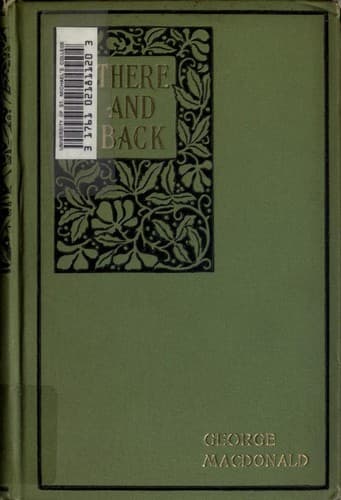
Christian fiction; Wingfold, Thomas (Fictitious character) -- Fiction
Barbara received her heartily, and they talked a little, lady Ann
imagining herself very pleasing: she rarely condescended to make herself
agreeable, and measured her success by her exertion. She found Barbara
in such good spirits that she pronounced her heartless--not to her son,
or to any but herself, who would not have come near her but for the
money to be got with her. She begged her, notwithstanding, for the sake
of her complexion, to leave her mother an hour or two now and then, and
ride over to Mortgrange. Incessant watching would injure her health, and
health was essential to beauty! Barbara protested that nothing ever hurt
her; that she was the only person she knew fit to be a nurse, because
she was never ill. When her ladyship, for once oblivious of her manners,
grew importunate, Barbara flatly refused.
“You must pardon me, lady Ann,” she said; “I cannot, and I will not
leave my mother.”
Then lady Ann thought it might be wise to make a little more of the
mother to whom she seemed so devoted. She had imagined the daughter
of the coarse woman must feel toward her as she did, and suspected a
coarser grain in the daughter than she had supposed, because she was not
disgusted with her mother. She did not know that eyes of love see the
true being where other eyes see only its shadow; and shadows differ a
good deal from their bodies.
But meeting Mr. Wylder in the avenue as she returned, and stopping her
carriage to speak to him, lady Ann changed her mind, and resolved to
curry favour with the husband instead of the wife. For hitherto she
had scarcely seen Mr. Wylder, and knew about him only by unfavourable
hearsay; but she was charmed with him now, and drew from him a promise
to go and dine at Mortgrange.
Bab went singing back to her mother, who was never so ill that she did
not like to hear her voice. She could not always bear it in the room,
but outside she was never tired of it. So Bab went about the house
singing like a mavis. But she never passed a servant, male or female,
without ceasing her song to say a kind word; and her mother, who, now
that she had got on a little, lay listening with her keenest of ears,
knew by the checks and changes of Bab's song, something of what was
going on in the house. If one asked Bab what made her so happy, she
would answer that she had nothing to make her unhappy; and there was
more philosophy in the answer than may at first appear. For certainly
the normal condition of humanity is happiness, and the thing that should
be enough to make us happy, is simply the absence of anything to make us
unhappy.
“Everything,” she would answer another time, “is making me happy.”
“I think I _am_ happiness,” she said once.
How could she _naturally_ be other than happy, seeing she came of
happiness! “Il lieto fattore,” says Dante; “whose happy-making sight,”
says Milton.
Public-domain text, read in full here on John Shaqi.
Reviews
Reviews
No reviews yet
Be the first to share your thoughts on this work.
Elsewhere in the archive
Join the Discussion
Join the discussion
Sign in to leave a comment or review.
Sign InorCreate an account