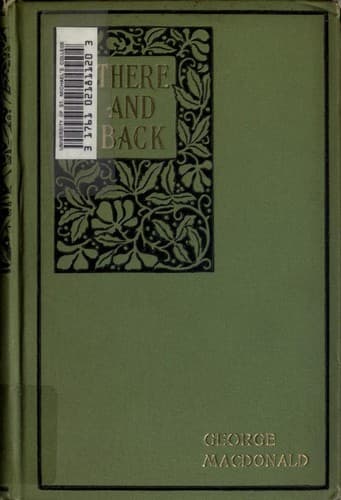
Christian fiction; Wingfold, Thomas (Fictitious character) -- Fiction
He seemed now to understand why Barbara had not written. She had known
him as the son of honest tradespeople, and had no pride to make her
despise him; but learning from Alice that he was base-born, she might
well wish to drop him! It might not be altogether fair of Barbara--for
how was he to blame? Almost as little was she to blame, brought up to
count such as he disgraced from their birth! Doubtless her religion
should have raised her above the cruel and false prejudice, for she said
it taught her to be fair, insisted that she should be just! But with
all the world against him, how could one girl stand up for him! True he
needed fair play just so much the more; but that was the way things
went in this best of possible worlds! No two things in it, meant to go
together, fitted! He fought hard for Barbara, strained his strength with
himself to be content beforehand with whatever she might do, or think,
or say. One thing only he could not bear--to think less of Barbara! That
would kill him, paralyze his very soul!--of a man make him a machine, a
beast outright at best! In all the world, Barbara was likest the God she
believed in: if she--the idea of her, that was, were taken from him,
he must despair! He could stand losing herself, he said, but not the
thought of her! Let him keep that! Let him keep that! He would revel in
that, and defy all the evil gods in the great universe!
With his heart like a stone in his bosom, he reached the house, a home
to him no more! and by effort supreme--in which, to be honest, for
Richard was not yet a hero, he was aided by the consciousness of doing
a thing of praise--managed to demean himself rather better than of late.
The surges of the sea of troubles rose to overwhelm him; his courage
rose to brave them: let them do their worst! he would be a man still!
True, his courage had a cry at the heart of it; but there was not
a little of the stoic in Richard, and if it was not the stoicism of
Epictetus or of Marcus Aurelius, there was yet some timely, transient
help in it. He was doing the best he could without God; and sure the
Father was pleased to see the effort of his child! To suffer in patience
was a step toward himself. No doubt self was potent in the patience,
and not the best self, for that forgets itself--yet the better self, the
self that chooses what good it knows.
The same night he laid his request for fixed wages before his father,
who agreed to it at once. He believed it no small matter in education
that a youth should have money at his disposal; and his wife agreed,
with a pang, to what he counted a reasonable sum for Richard's board.
But she would not hear of his paying for his lodging; that was more than
the mother heart could bear: it would be like yielding that he was not
her very own child!
The trouble remained, that a long week must elapse before he could touch
any wages, and he dared not borrow for fear of questions: there was no
help!
Public-domain text, read in full here on John Shaqi.
Reviews
Reviews
No reviews yet
Be the first to share your thoughts on this work.
Elsewhere in the archive
Join the Discussion
Join the discussion
Sign in to leave a comment or review.
Sign InorCreate an account