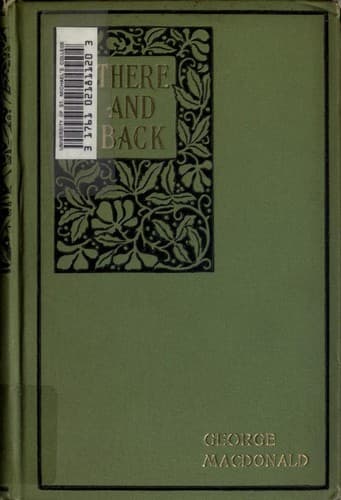
Christian fiction; Wingfold, Thomas (Fictitious character) -- Fiction
“The fellow shall go to college,” he said to himself; “and I won't give
my lady even a hint before I have him the finest gentleman and the best
scholar in the county! He shall be both! I will teach him billiards
myself! By Jove! it is more of a pleasure than at my years I had a right
to expect! To think of an old sinner like me being blessed with such a
victory over his worst enemy! It is more than I could deserve if I lived
to the age of Mephistopheles! I shouldn't like to live so long--there's
so little worth remembering! I wish forgetting things wiped them out!
There are things I hardly know whether I did or only wanted to do!--Damn
it, it may be all over Barset by this time, that the heir to sir
Wilton's property has turned up!”
He rang the bell, and ordered his carriage.
“I must see the old fellow, the rascal's grandfather!” he kept on to
himself. “I haven't exchanged a word with him for years! And now I think
of it, I take poor Robina's father for a very decent sort of fellow! If
he had but once hinted what he was, every soul in the parish would have
known it! I _must_ find out whether he's in my secret! I can't _prove_
it yet, but perhaps he can!”
Simon Armour was not astonished to see the Lestrange carriage stop at
the smithy: he thought sir Wilton had come about the cheque. He went
out, and stood in hairy arms and leather apron at the carriage door.
“Well, Armour, how are you?” said the baronet.
“Well and hearty, sir, I thank you,” answered Simon.
“I want a word with you,” said sir Wilton.
“Shall I tell the coachman to drive round to the cottage, sir?”
“No; I'll get out and walk there with you.”
Simon opened the carriage-door, and the baronet got out.
“That grandson of yours--” he began, the moment they were in Simon's
little parlour.
Simon started. “The old wretch knows!” he said to himself.
“--has been too much for me!” continued sir Wilton. “He got a cheque out
of me whether I would or not!”
“And got the money for it, sir!” answered the smith. “He seemed to think
the money better than the cheque!”
“I don't blame him, by Jove! There's decision in the fellow!--They say
his father's a bookbinder in London!”
“Yes, sir.”
“You know better! I don't want humbug, Armour! I'm not fond of it!”
“You told me people said his father was a bookbinder, and I said 'Yes,
sir'!”
“You know as well as I do it's a damned lie! The boy is mine. He belongs
neither to bookbinder nor blacksmith!”
“You'll allow me a small share in him, I hope! I've done more for him
than you, sir.”
“That's not my fault!”
“Perhaps not; but I've done more for him than you ever will, sir!”
“How do you make that out?”
“I've made him as good a shoesmith as ever drove nail! I don't say he's
up to his grandfather at the anvil yet, but--”
“An accomplishment no doubt, but not exactly necessary to a gentleman!”
“It's better than dicing or card-playing!” said the blacksmith.
Public-domain text, read in full here on John Shaqi.
Reviews
Reviews
No reviews yet
Be the first to share your thoughts on this work.
Elsewhere in the archive
Join the Discussion
Join the discussion
Sign in to leave a comment or review.
Sign InorCreate an account