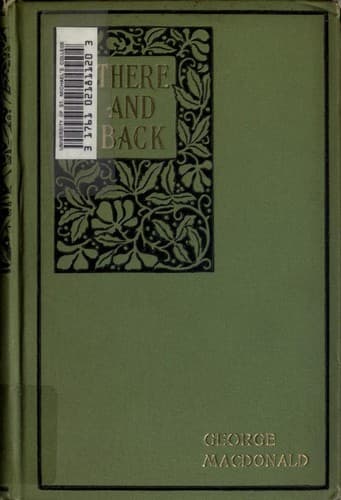
Christian fiction; Wingfold, Thomas (Fictitious character) -- Fiction
At once Barbara began, and told her mother the whole story of Richard
and herself. The mother listened. Old days and the memory of a lover,
not high in the social scale, whom she had to give up to marry Mr.
Wylder, came back upon her and her heart went with her daughter's before
she knew what it was about; her daughter's love and her own seemed to
mingle in one dusky shine, as if the daughter had inherited the mother's
experience. The heart of the mother would not have her child like
herself gather but weed-flowers of sorrow among the roses in the garden
of love. She had learned this much, that the things the world prizes are
of little good to still the hearts of women But when Barbara told her
how lady Ann would have it that this same Richard, the bookbinder, was a
natural son of sir Wilton, she started to her feet, crying,
“Then the natural bookbinder shall have her, and my lady's fool may go
to the devil! You shall have _my_ money, Bab, anyhow.”
“But, mammy dear,” said Barbara, “what will papa say?”
“Poof!” returned her mother. “I've known him too long to care what he
says!”
“I don't like offending him,” returned Barbara.
“Don't mention him again, child, or I'll turn him loose on your
bookbinder. Am I to put my own ewe-lamb to the same torture I had
to suffer by marrying him! God forbid I When you're happy with your
husband, perhaps you'll think of me sometimes and say, 'My mother did
it! She wasn't a good woman, but she loved her Bab!'”
A passionate embrace followed. Barbara left the room with a happy heart,
and went--not to her own to brood on her love, but to her brother's,
whose feeble voice she heard calling her. Upon him her gladness
overflowed.
CHAPTER LV. _MISS BROWN_.
The same evening Barbara rode to the smithy, in the hope of hearing some
news of Richard from his grandfather. The old man was busy at the anvil
when he heard Miss Brown's hoofs on the road. He dropped his hammer,
flung the tongs on the forge, and leaving the iron to cool on the anvil,
went to meet her.
“How do you do, grandfather?” said Barbara, with unconscious use of the
appellation.
Simon was well pleased to be called grandfather, but too politic and too
well bred to show his pleasure.
“As well as hard work can help me to. How are you yourself, my pretty?”
returned Simon.
“As well as nothing to do--except nursing poor Mark--will let me,” she
answered. “Please can you tell me anything about Richard yet?”
“Can you keep a secret, honey?” rejoined Simon. “I ain't sure as
I'm keeping strict within the law, but if I didn't think you fit, I
shouldn't say a word.”
“Don't tell me, if it be anything I ought to tell if I knew it.”
“If you can show me you ought to tell any one, I will release you from
your promise. But perhaps you feel you ought to tell everything to your
mother?”
“No, not other people's secrets. But I think I won't have it. I don't
like secrets. I'm frightened at them.”
Public-domain text, read in full here on John Shaqi.
Reviews
Reviews
No reviews yet
Be the first to share your thoughts on this work.
Elsewhere in the archive
Join the Discussion
Join the discussion
Sign in to leave a comment or review.
Sign InorCreate an account