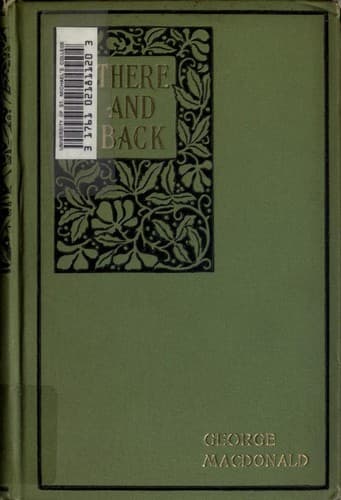
Christian fiction; Wingfold, Thomas (Fictitious character) -- Fiction
“What is the matter, Richard?” she said, looking in his face with
anxiety. “What has gone wrong?”
“My father has turned me out.”
“Turned you out?”
“Yes. I must swear never to speak another word to Alice or Arthur, or go
about my business. I went.”
“Of course you did!” cried Barbara, lifting her dainty chin an inch
higher.
Then, after a little pause, in which she looked with loving pride
straight into his eyes--for was he not a man after her own brave big
heart!--she resumed:
“Well, it is no worse for you than before, and ever so much better for
me!--What are you going to do, Richard?--There are so many things you
could turn to now!”
“Yes, but only one I can do well. I might get fellows to coach, but I
should have to wait too long--and then I should have to teach what
I thought worth neither the time nor the pay. I prefer to live by my
hands, and earn leisure for something else.”
“I like that,” said Barbara. “Will it take you long to get into the way
of your old work?”
“I don't think it will,” answered Richard; “and I believe I shall do
better at it now. I was looking at some of it yesterday morning, and was
surprised I should have been pleased with it. In myself growing, I have
grown to demand better work--better both in idea and execution.”
“It is horrid to have you go,” said Barbara; “but I will think you up to
God every day, and dream about you every night, and read about you every
book. I will write to you, and you will write to me--and--and”--she was
on the point of crying, but would not--“and then the old smell of the
leather and the paste will be so nice!”
She broke into a merry laugh, and the crisis was over. They walked
together to the smithy. Fierce was the wrath of the blacksmith. But for
the presence of Barbara, he would have called his son-in-law ugly names.
His anger soon subsided, however, and he laughed at himself for spending
indignation on such a man.
“I might have known him by this time!” he said. “--But just let him come
near the smithy!” he resumed, and his eyes began to flame again. “He
shall know, if he does, what a blacksmith thinks of a baronet!--What are
you going to do, my son?”
“Go back to my work.”
“Never to that old-wife-trade?” cried the blacksmith. “Look here,
Richard!” he said, and bared his upper arm, “there's what the anvil
does!” Then he bent his shoulders, and began to wheeze. “And there's
what the bookbinding does!” he continued. “No, no; you turn in with me,
and we'll show them a sight!--a gentleman that can make his living
with his own hands! The country shall see sir Wilton Lestrange's heir
a blacksmith because he wouldn't be a snob and deny his own flesh
and blood!--'I saw your son to-day, sir Wilton--at the anvil with his
grandfather! What a fine fellow he do be! Lord, how he do make the
sparks fly!'--If I had him, the old sinner, he should see sparks that
came from somewhere else than the anvil!--You turn in with me, Richard,
and do work fit for a man!”
Public-domain text, read in full here on John Shaqi.
Reviews
Reviews
No reviews yet
Be the first to share your thoughts on this work.
Elsewhere in the archive
Join the Discussion
Join the discussion
Sign in to leave a comment or review.
Sign InorCreate an account