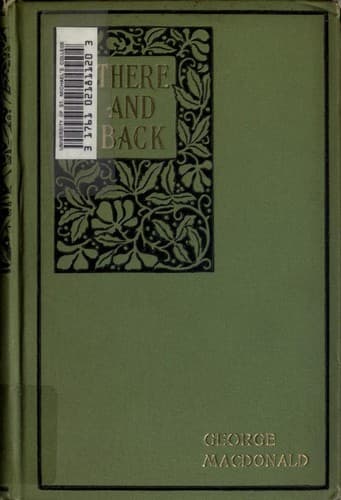
Christian fiction; Wingfold, Thomas (Fictitious character) -- Fiction
“There is little praise to be got from men for that,” said Wingfold;
“and I am sure Richard does not seek any. He would help men to see
that the man who serves his neighbour, is the man whom the Lord of the
universe honours. An idle man, or one busy only for himself, is like a
lump of refuse floating this way and that in the flux and reflux of the
sewer-tide of the world. Were Richard lord of lands it would be absurd
of him to give his life to bookbinding; that would be to desert his
neighbour on those lands; but what better can he do now than follow the
trade by which he may at once earn his living? To omit the question of
possibility,--suppose he read for the bar, would that bring him closer
to humanity? Would it be a diviner mode of life? Is it a more honourable
thing to win a cause--perhaps for the wrong man--than to preserve an old
and valuable book? Will a man rank higher in the kingdom that shall not
end, because he has again and again rendered unrighteousness triumphant?
Would Richard's mind be as free in chambers as in the workshop to search
into truth, or as keen to suspect its covert? Would he sit closer to the
well-springs of thought and aspiration in a barrister's library, than
among the books by which he wins his bread?”
With eternity before them, and God at the head and the heart of the
universe, Richard and Barbara did not believe in separation any more
than in death. He in London and she at Wylder Hall, they were far more
together than most unparted pairs.
Wingfold set himself to keep Barbara busy, giving her plenty to read and
plenty of work: her waiting should be no loss of time to her if he
could help it! Among other things, he set her to teach his boy where she
thought herself much too ignorant: he held, not only that to teach is
the best way to learn, but that the imperfect are the best teachers of
the imperfect. He thought this must be why the Lord seems to regard with
so much indifference the many falsehoods uttered of and for him. When
a man, he said, agonized to get into other hearts the thing dear to his
own, the false intellectual or even moral forms in which his ignorance
and the crudity of his understanding compelled him to embody it, would
not render its truth of none effect, but might, on the contrary, make
its reception possible where a truer presentation would stick fast in
the door-way.
He made Richard promise to take no important step for a year without
first letting him know. He was anxious he should have nothing to undo
because of what the packet committed to his care might contain.
CHAPTER LXV. _THE PACKET_.
Public-domain text, read in full here on John Shaqi.
Reviews
Reviews
No reviews yet
Be the first to share your thoughts on this work.
Elsewhere in the archive
Join the Discussion
Join the discussion
Sign in to leave a comment or review.
Sign InorCreate an account