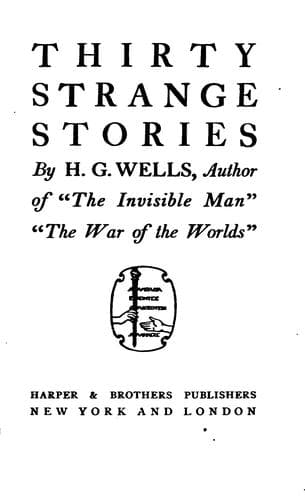
Thirty Strange StoriesWells, H. G. (Herbert George)
Science
Thirty Strange Stories
Wells, H. G. (Herbert George)
Fantasy fiction, English; Science fiction, English; Short stories, English
No human being had witnessed the act, and he was cocksure that no Higher
Power existed to see it, but for all that it worried him. Memories are
not dead things, but alive; they dwindle in disuse, but they harden and
develop in all sorts of queer ways if they are being continually
fretted. Curiously enough, though at the time he perceived clearly that
the shifting was accidental, as the days wore on his memory became
confused about it, until at last he was not sure, although he assured
himself that he _was_ sure, whether the movement had been absolutely
involuntary. Then it is possible that Hill’s dietary was conducive to
morbid conscientiousness,—a breakfast frequently eaten in a hurry, a
midday bun, and, at such hours after five as chanced to be convenient,
such meat as his means determined, usually in a chophouse in a back
street off the Brompton Road. Occasionally he treated himself to
threepenny and ninepenny classics, and they usually represented a
suppression of potatoes or chops. It is indisputable that outbreaks of
self-abasement and emotional revival have a distinct relation to periods
of scarcity. But apart from this influence on the feelings, there was in
Hill a distinct aversion to falsity, that the blasphemous Landport
cobbler had inculcated by strap and tongue from his earliest years. Of
one fact about professed Atheists I am convinced: they may be, they
usually are, fools, void of subtlety, revilers of holy institutions,
brutal speakers, and mischievous knaves; but they lie with difficulty.
If it were not so, if they had the faintest grasp of the idea of
compromise, they would simply be liberal Churchmen. And, moreover, this
memory poisoned his regard for Miss Haysman. For she now preferred him
to Wedderburn so evidently that he felt sure he cared for her, and began
reciprocating her attentions by timid marks of personal regard,—at one
time he even bought a bunch of violets, carried it about in his pocket,
and produced it with a stumbling explanation, withered and dead, in the
gallery of old iron. It poisoned, too, the denunciation of capitalist
dishonesty that had been one of his life’s pleasures. And, lastly, it
poisoned his triumph over Wedderburn. Previously he had been
Wedderburn’s superior in his own eyes, and had raged simply at a want of
recognition. Now he began to fret at the darker suspicion of a positive
inferiority. He fancied he found justification for his position in
Browning; but they vanished on analysis. At last, moved curiously enough
by exactly the same motive forces that had resulted in his dishonesty,
he went to Professor Bindon and made a clean breast of the whole affair.
As Hill was a paid student, Professor Bindon did not ask him to sit
down, and he stood before the Professor’s desk as he made his
confession.
Public-domain text, read in full here on John Shaqi.
Reviews
Reviews
No reviews yet
Be the first to share your thoughts on this work.
Elsewhere in the archive
Join the Discussion
Join the discussion
Sign in to leave a comment or review.
Sign InorCreate an account