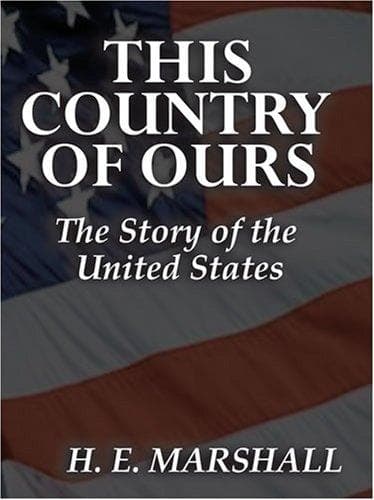
This Country of OursMarshall, H. E. (Henrietta Elizabeth)
History
This Country of Ours
Marshall, H. E. (Henrietta Elizabeth)
United States -- History
It was he who changed the name from North Virginia to New England,
by which name it has ever since been known. He also named the great
river which he found there Charles River after Prince Charles,
who later became King Charles I, and all along the coast he marked
places with the names of English towns, one of which he named
Plymouth.
But Smith did not succeed in founding a colony in New England;
and several adventurers who followed him had no better success.
The difficulties to be overcome were great, and in order to found
a colony on that inhospitable coast men of tremendous purpose and
endurance were needed. At length these men appeared.
Nowadays a man may believe what he likes either in the way of politics
or religion. He may belong to any political party he pleases, or
he may belong to none. He may write and make speeches about his
opinions. Probably no one will listen to him; certainly he will
not be imprisoned for mere opinions. It is the same with religion.
A man may go to any church he likes, or go to none. He may write
books or preach sermons, and no one will hinder him.
But in the days of King James things were very different. In those
days there was little freedom either in thought or action, in
religion or politics. As we have seen King James could not endure
the thought that his colony should be self-governing and free to
make laws for itself. Consequently he took its charter away. In
religion it was just the same. In England at the Reformation the
King had been made head of the Church. And if people did not believe
what the King and Clergy told them to believe they were sure, sooner
or later, to be punished for it.
Now in England more and more people began to think for themselves
on matters of religion. More and more people found it difficult to
believe as King and Clergy wished them to believe. Some found the
Church of England far too like the old Church of Rome. They wanted
to do away with all pomp and ceremony and have things quite simple.
They did not wish to separate from the Church; they only wanted to
make the Church clean and pure of all its errors. So they got the
name of Puritans. Others however quite despaired of making the Church
pure. They desired to leave it altogether and set up a Church of
their own. They were called Separatists, or sometimes, from the
name of a man who was one of their chief leaders, Brownists.
These Brownists did not want to have bishops and priests, and they
would not own the King as head of the Church. Instead of going
to church they used to meet together in private houses, there to
pray to God in the manner in which their own hearts told them was
right. This of course was considered treason and foul wickedness.
So on all hands the Brownists were persecuted. They were fined and
imprisoned, some were even hanged. But all this persecution was in
vain, and the number of Separatists instead of decreasing increased
as years went on.
Public-domain text, read in full here on John Shaqi.
Reviews
Reviews
No reviews yet
Be the first to share your thoughts on this work.
Elsewhere in the archive
Join the Discussion
Join the discussion
Sign in to leave a comment or review.
Sign InorCreate an account