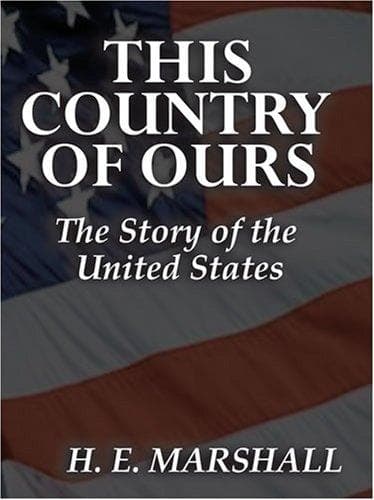
This Country of OursMarshall, H. E. (Henrietta Elizabeth)
History
This Country of Ours
Marshall, H. E. (Henrietta Elizabeth)
United States -- History
By the time that Harry Vane was chosen Governor the matter had
become serious. All the colony took sides for or against. Harry Vane,
who stood for toleration and freedom, sided with Mrs. Hutchinson,
while Winthrop, his great rival, sided against her. Mrs. Hutchinson
was supported and encouraged in her wickedness by her brother-in-law
John Wheelright, a "silenced minister sometimes in England." She
also led away many other godly hearts.
The quarrel affected the whole colony, and was a stumbling-block
in the way of all progress. But so long as Harry Vane was Governor,
Mrs. Hutchinson continued her preaching and teaching. When he sailed
home, however, and Winthrop was Governor once more, the elders
of the community decided that Mrs. Hutchinson was a danger to the
colony, and must be silenced. So all the elders and leaders met
together in assembly, and condemned her opinions, some as being
"blasphemous, some erroneous, and all unsafe."
A few women, they decided, might without serious wrong meet together
to pray and edify one another. But that a large number of sixty
or more should do so every week was agreed to be "disorderly and
without rule." And as Mrs. Hutchinson would not cease her preaching
and teaching, but obstinately continued in her gross errors, she
was excommunicated and exiled from the colony.
Like Williams, Mrs. Hutchinson went to Rhode Island. To the sorrow
of the godly, her husband went with her. And when they tried to
bring him back he refused. "For," he said, "I am more dearly tied
to my wife than to the Church. And I do think her a dear saint and
servant of God."
In Rhode Island Mrs. Hutchinson and her friends founded the towns
of Portsmouth and Newport. Others who had been driven out of one
colony or another followed them, and other towns were founded;
and for a time Rhode Island seems to have been a sort of Ishmael's
land, and the most unruly of all the New England colonies. At
length however all these little settlements joined together under
one Governor.
At first the colony had no charter, and occupied the land only
by right of agreement with the Indians. But after some time Roger
Williams got a charter from Charles II. In this charter it was
set down that no one should be persecuted "for any difference in
opinion on matters of religion." Thus another new state was founded,
and in Rhode Island there was more real freedom than in almost any
other colony in New England.
Public-domain text, read in full here on John Shaqi.
Reviews
Reviews
No reviews yet
Be the first to share your thoughts on this work.
Elsewhere in the archive
Join the Discussion
Join the discussion
Sign in to leave a comment or review.
Sign InorCreate an account