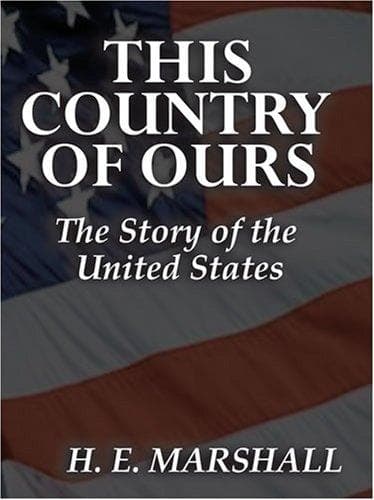
This Country of OursMarshall, H. E. (Henrietta Elizabeth)
History
This Country of Ours
Marshall, H. E. (Henrietta Elizabeth)
United States -- History
The worst was still to come, however. Theodosia set out from Carolina
to visit her father. But the ship in which she sailed never came
to port. It was never heard of again, and all on board were lost.
Now at length Burr's head was bowed. Life held nothing more for
him, and he cared no longer to live. But death passed him by. So
for more than twenty years he lived, a lonely forsaken old man. He
was eighty years old when he died.
__________
Chapter 69 - Madison - The Shooting Star and the Prophet
Jefferson was twice chosen President. He might, had he wished,
have been elected a third time. But like Washington he refused he
refused to stand. And as those two great presidents refused to be
elected a third time it has become a kind of unwritten law in the
United States that no man shall be president longer than eight
years.
The next president to be elected was James Madison, who had
been Jefferson's secretary and friend. He was a little man always
carefully and elegantly dressed. He was kindly natured and learned,
and, like Jefferson, he loved peace. He soon, however, found himself
and his country at war.
Ever since the Indians had been defeated by General Wayne they had
been at peace. But now they again became restless. It was for the
old cause. They saw the white people spreading more and more over
their land, they saw themselves being driven further and further from
their hunting grounds, and their sleeping hatred of the Pale-faces
awoke again.
And now a great chief rose to power among the Indians. He was called
Tecumseh or Shooting Star. He was tall, straight and handsome, a
great warrior and splendid speaker.
Tecumseh's desire was to unite all the Indians into one great
nation, and drive the Pale-faces out of the land. In this he was
joined by his brother Tenskwatawa or the Open Door. He took this
name because, he said, he was the Open Door through which all might
learn of the Great Spirit. He soon came to be looked upon as a very
great Medicine Man and prophet, and is generally called the Prophet.
Much that the Prophet taught to the people was good. He told them
that they ought to give up fighting each other, and join together
into one nation, that they ought to till the ground and sow corn;
and above all that they should have nothing to do with "fire water."
"It is not made for you," he said, "but for the white people who
alone know how to use it. It is the cause of all the mischief which
the Indians suffer."
The Prophet also told the Indians that they had no right to sell
their land, for the Great Spirit had given it to them. And so great
was the Prophet's influence that he was able to build a town where
the Indians lived peacefully tilling the ground, and where no "fire
water' was drunk.
Public-domain text, read in full here on John Shaqi.
Reviews
Reviews
No reviews yet
Be the first to share your thoughts on this work.
Elsewhere in the archive
Join the Discussion
Join the discussion
Sign in to leave a comment or review.
Sign InorCreate an account