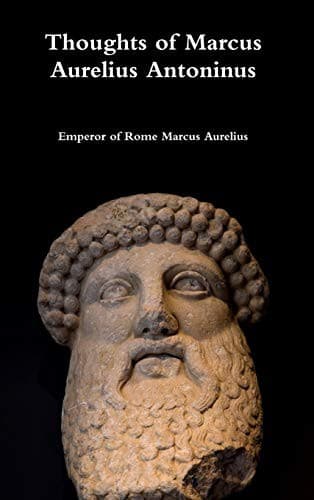
Thoughts of Marcus Aurelius AntoninusMarcus Aurelius, Emperor of Rome
PhilosophyPhilosophy
Thoughts of Marcus Aurelius Antoninus
Marcus Aurelius, Emperor of Rome
Ethics; Life; Marcus Aurelius, Emperor of Rome, 121-180; Stoics
17. Eudaemonia [happiness] is a good daemon, or a good thing. What then
art thou doing here, O imagination? Go away, I entreat thee by the gods,
as thou didst come, for I want thee not. But thou art come according to
thy old fashion. I am not angry with thee: only go away.
18. Is any man afraid of change? Why, what can take place without
change? What then is more pleasing or more suitable to the universal
nature? And canst thou take a bath unless the wood undergoes a change?
and canst thou be nourished, unless the food undergoes a change? And can
anything else that is useful be accomplished without change? Dost thou
not see then that for thyself also to change is just the same, and
equally necessary for the universal nature?
19. Through the universal substance as through a furious torrent all
bodies are carried, being by their nature united with and co-operating
with the whole, as the parts of our body with one another. How many a
Chrysippus, how many a Socrates, how many an Epictetus has time already
swallowed up! And let the same thought occur to thee with reference to
every man and thing (v. 23; vi. 15).
20. One thing only troubles me, lest I should do something which the
constitution of man does not allow, or in the way which it does not
allow, or what it does not allow now.
21. Near is thy forgetfulness of all things; and near the forgetfulness
of thee by all.
22. It is peculiar to man to love even those who do wrong. And this
happens, if when they do wrong it occurs to thee that they are kinsmen,
and that they do wrong through ignorance and unintentionally, and that
soon both of you will die; and above all, that the wrong-doer has done
thee no harm, for he has not made thy ruling faculty worse than it was
before.
23. The universal nature out of the universal substance, as if it were
wax, now moulds a horse, and when it has broken this up, it uses the
material for a tree, then for a man, then for something else; and each
of these things subsists for a very short time. But it is no hardship
for the vessel to be broken up, just as there was none in its being
fastened together (viii. 50).
24. A scowling look is altogether unnatural; when it is often
assumed,[A] the result is that all comeliness dies away, and at last is
so completely extinguished that it cannot be again lighted up at
all. Try to conclude from this very fact that it is contrary to reason.
For if even the perception of doing wrong shall depart, what reason is
there for living any longer?
[A] This is corrupt.
25. Nature which governs the whole will soon change all things thou
seest, and out of their substance will make other things, and again
other things from the substance of them, in order that the world may be
ever new (xii. 23).
Public-domain text, read in full here on John Shaqi.
Reviews
Reviews
No reviews yet
Be the first to share your thoughts on this work.
Elsewhere in the archive
Join the Discussion
Join the discussion
Sign in to leave a comment or review.
Sign InorCreate an account