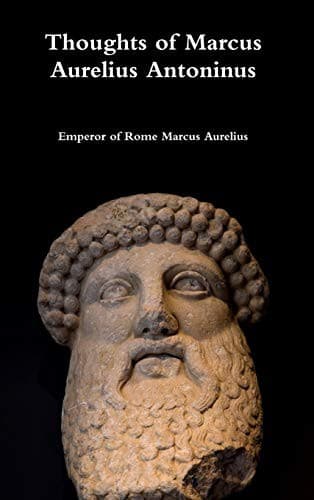
Thoughts of Marcus Aurelius AntoninusMarcus Aurelius, Emperor of Rome
PhilosophyPhilosophy
Thoughts of Marcus Aurelius Antoninus
Marcus Aurelius, Emperor of Rome
Ethics; Life; Marcus Aurelius, Emperor of Rome, 121-180; Stoics
24. Quarrels of little children and their sports, and poor spirits
carrying about dead bodies [such is everything]; and so what is
exhibited in the representation of the mansions of the dead[A] strikes
our eyes more clearly.
[A] [Greek: to tês Nekuias] may be, as Gataker conjectures, a
dramatic representation of the state of the dead. Schultz
supposes that it may be also a reference to the [Greek: Nekuia]
of the Odyssey (lib. xi.).
25. Examine into the quality of the form of an object, and detach it
altogether from its material part, and then contemplate it; then
determine the time, the longest which a thing of this peculiar form is
naturally made to endure.
26. Thou hast endured infinite troubles through not being contented with
thy ruling faculty when it does the things which it is constituted by
nature to do. But enough + [of this].
27. When another blames thee or hates thee, or when men say about thee
anything injurious, approach their poor souls, penetrate within, and see
what kind of men they are. Thou wilt discover that there is no reason to
take any trouble that these men may have this or that opinion about
thee. However, thou must be well disposed towards them, for by nature
they are friends. And the gods too aid them in all ways, by dreams, by
signs, towards the attainment of those things on which they set a value.+
28. The periodic movements of the universe are the same, up and down
from age to age. And either the universal intelligence puts itself in
motion for every separate effect, and if this is so, be thou content
with that which is the result of its activity; or it puts itself in
motion once, and everything else comes by way of sequence[A] in a
manner; or indivisible elements are the origin of all things.--In a
word, if there is a god, all is well; and if chance rules, do not thou
also be governed by it (vi. 44; vii. 75).
[A] The words which immediately follow [Greek: kat'
epakolouthêsin] are corrupt. But the meaning is hardly
doubtful. (Compare vii. 75.)
Soon will the earth cover us all: then the earth, too, will change, and
the things also which result from change will continue to change
forever, and these again forever. For if a man reflects on the changes
and transformations which follow one another like wave after wave and
their rapidity, he will despise everything which is perishable (xii.
21).
Public-domain text, read in full here on John Shaqi.
Reviews
Reviews
No reviews yet
Be the first to share your thoughts on this work.
Elsewhere in the archive
Join the Discussion
Join the discussion
Sign in to leave a comment or review.
Sign InorCreate an account