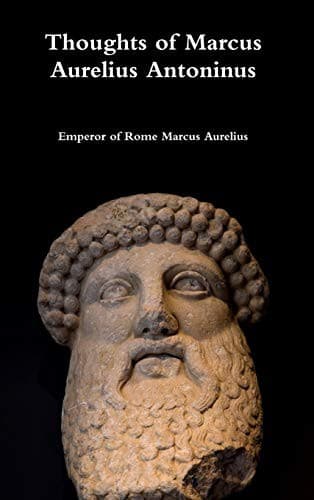
Thoughts of Marcus Aurelius AntoninusMarcus Aurelius, Emperor of Rome
PhilosophyPhilosophy
Thoughts of Marcus Aurelius Antoninus
Marcus Aurelius, Emperor of Rome
Ethics; Life; Marcus Aurelius, Emperor of Rome, 121-180; Stoics
34. What are these men's leading principles, and about what kind of
things are they busy, and for what kind of reasons do they love and
honor? Imagine that thou seest their pool souls laid bare. When they
think that they do harm by their blame or good by their praise, what an
idea!
35. Loss is nothing else than change. But the universal nature delights
in change, and in obedience to her all things are now done well, and
from eternity have been in like form, and will be such to time without
end. What, then, dost thou say,--that all things have been and all
things always will be bad, and that no power has ever been found in so
many gods to rectify these things, but the world has been condemned to
be bound in never ceasing evil (iv. 45, vii. 18)?
36. The rottenness of the matter which is the foundation of everything!
water, dust, bones, filth: or again, marble rocks, the callosities of
the earth; and gold and silver, the sediments; and garments, only bits
of hair; and purple dye, blood; and everything else is of the same kind.
And that which is of the nature of breath is also another thing of the
same kind, changing from this to that.
37. Enough of this wretched life and murmuring and apish tricks. Why art
thou disturbed? What is there new in this? What unsettles thee? Is it
the form of the thing? Look at it. Or is it the matter? Look at it. But
besides these there is nothing. Towards the gods then, now become at
last more simple and better. It is the same whether we examine these
things for a hundred years or three.
38. If a man has done wrong the harm is his own. But perhaps he has not
done wrong.
39. Either all things proceed from one intelligent source and come
together as in one body, and the part ought not to find fault with what
is done for the benefit of the whole; or there are only atoms, and
nothing else than mixture and dispersion. Why, then, art thou disturbed?
Say to the ruling faculty, Art thou dead, art thou corrupted, art thou
playing the hypocrite, art thou become a beast, dost thou herd and feed
with the rest?[A]
[A] There is some corruption at the end of this section, but I
think that the translation expresses the emperor's meaning.
Whether intelligence rules all things or chance rules, a man
must not be disturbed. He must use the power that he has and be
tranquil.
Public-domain text, read in full here on John Shaqi.
Reviews
Reviews
No reviews yet
Be the first to share your thoughts on this work.
Elsewhere in the archive
Join the Discussion
Join the discussion
Sign in to leave a comment or review.
Sign InorCreate an account