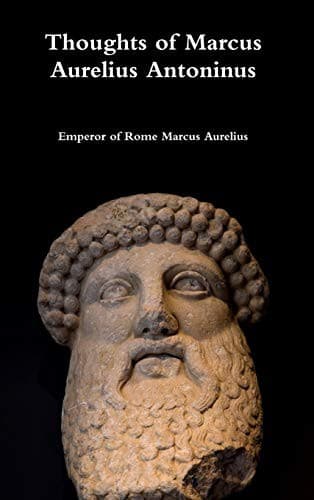
Thoughts of Marcus Aurelius AntoninusMarcus Aurelius, Emperor of Rome
PhilosophyPhilosophy
Thoughts of Marcus Aurelius Antoninus
Marcus Aurelius, Emperor of Rome
Ethics; Life; Marcus Aurelius, Emperor of Rome, 121-180; Stoics
26. When thou art troubled about anything, thou hast forgotten this,
that all things happen according to the universal nature; and forgotten
this, that a man's wrongful act is nothing to thee; and further thou
hast forgotten this, that everything which happens, always happened so
and will happen so, and now happens so everywhere; forgotten this too,
how close is the kinship between a man and the whole human race, for it
is a community, not of a little blood or seed, but of intelligence. And
thou hast forgotten this too, that every man's intelligence is a god and
is an efflux of the Deity;[A] and forgotten this, that nothing is a
man's own, but that his child and his body and his very soul came from
the Deity; forgotten this, that everything is opinion; and lastly thou
hast forgotten that every man lives the present time only, and loses
only this.
[A] See Epictetus, ii. 8, 9, etc.
27. Constantly bring to thy recollection those who have complained
greatly about anything, those who have been most conspicuous by the
greatest fame or misfortunes or enmities or fortunes of any kind: then
think where are they all now? Smoke and ash and a tale, or not even a
tale. And let there be present to thy mind also everything of this sort,
how Fabius Catellinus lived in the country, and Lucius Lupus in his
gardens, and Stertinius at Briae, and Tiberius at Capreae, and Velius
Rufus [or Rufus at Velia]; and in fine think of the eager pursuit of
anything conjoined with pride;[A] and how worthless everything is after
which men violently strain; and how much more philosophical it is for a
man in the opportunities presented to him to show himself just,
temperate, obedient to the gods, and to do this with all simplicity: for
the pride which is proud of its want of pride is the most intolerable of
all.
[A] [Greek: met' oiêseôs. Oiêsis kai typhos], Epict. i. 8, 6.
28. To those who ask, Where hast thou seen the gods, or how dost thou
comprehend that they exist and so worshippest them, I answer, in the
first place, they may be seen even with the eyes;[A] in the second
place, neither have I seen even my own soul, and yet I honor it. Thus
then with respect to the gods, from what I constantly experience of
their power, from this I comprehend that they exist, and I venerate
them.
Public-domain text, read in full here on John Shaqi.
Reviews
Reviews
No reviews yet
Be the first to share your thoughts on this work.
Elsewhere in the archive
Join the Discussion
Join the discussion
Sign in to leave a comment or review.
Sign InorCreate an account