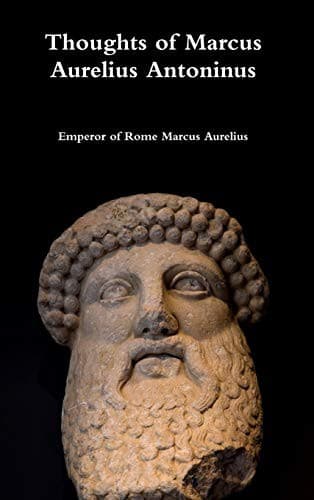
Thoughts of Marcus Aurelius AntoninusMarcus Aurelius, Emperor of Rome
PhilosophyPhilosophy
Thoughts of Marcus Aurelius Antoninus
Marcus Aurelius, Emperor of Rome
Ethics; Life; Marcus Aurelius, Emperor of Rome, 121-180; Stoics
rational being, keep to it; but if it is only useful to thee as an
animal, say so, and maintain thy judgment without arrogance: only take
care that thou makest the inquiry by a sure method.
7. Never value anything as profitable to thyself which shall compel thee
to break thy promise, to lose thy self-respect, to hate any man, to
suspect, to curse, to act the hypocrite, to desire anything which needs
walls and curtains: for he who has preferred to everything else his own
intelligence and daemon and the worship of its excellence, acts no
tragic part, does not groan, will not need either solitude or much
company; and, what is chief of all, he will live without either pursuing
or flying from [death];[A] but whether for a longer or a shorter time he
shall have the soul enclosed in the body, he cares not at all: for even
if he must depart immediately, he will go as readily as if he were going
to do anything else which can be done with decency and order; taking
care of this only all through life, that his thoughts turn not away from
anything which belongs to an intelligent animal and a member of a civil
community.
[A] Comp. ix. 3.
8. In the mind of one who is chastened and purified thou wilt find no
corrupt matter, nor impurity, nor any sore skinned over. Nor is his life
incomplete when fate overtakes him, as one may say of an actor who
leaves the stage before ending and finishing the play. Besides, there is
in him nothing servile, nor affected, nor too closely bound [to other
things], nor yet detached[A] [from other things], nothing worthy of
blame, nothing which seeks a hiding-place.
[A] viii. 34.
9. Reverence the faculty which produces opinion. On this faculty it
entirely depends whether there shall exist in thy ruling part any
opinion inconsistent with nature and the constitution of the rational
animal. And this faculty promises freedom from hasty judgment, and
friendship towards men, and obedience to the gods.
10. Throwing away then all things, hold to these only which are few; and
besides, bear in mind that every man lives only this present time, which
is an indivisible point, and that all the rest of his life is either
past or it is uncertain. Short then is the time which every man lives;
and small the nook of the earth where he lives; and short too the
longest posthumous fame, and even this only continued by a succession of
poor human beings, who will very soon die, and who know not even
themselves, much less him who died long ago.
Public-domain text, read in full here on John Shaqi.
Reviews
Reviews
No reviews yet
Be the first to share your thoughts on this work.
Elsewhere in the archive
Join the Discussion
Join the discussion
Sign in to leave a comment or review.
Sign InorCreate an account