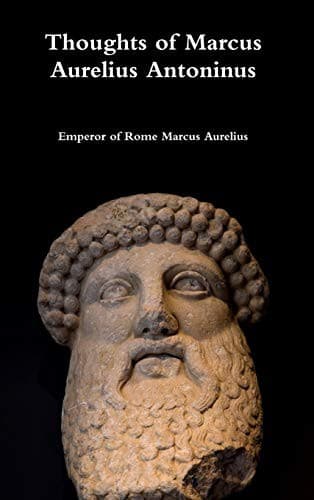
Thoughts of Marcus Aurelius AntoninusMarcus Aurelius, Emperor of Rome
PhilosophyPhilosophy
Thoughts of Marcus Aurelius Antoninus
Marcus Aurelius, Emperor of Rome
Ethics; Life; Marcus Aurelius, Emperor of Rome, 121-180; Stoics
20. Everything which is in any way beautiful is beautiful in itself, and
terminates in itself, not having praise as part of itself. Neither worse
then nor better is a thing made by being praised. I affirm this also of
the things which are called beautiful by the vulgar, for example,
material things and works of art. That which is really beautiful has no
need of anything; not more than law, not more than truth, not more than
benevolence or modesty. Which of these things is beautiful because it
is praised, or spoiled by being blamed? Is such a thing as an emerald
made worse than it was, if it is not praised? or gold, ivory, purple, a
lyre, a little knife, a flower, a shrub?
[Illustration: INTERIOR OF THE PARTHENON]
21. If souls continue to exist, how does the air contain them from
eternity?--But how does the earth contain the bodies of those who have
been buried from time so remote? For as here the mutation of these
bodies after a certain continuance, whatever it may be, and their
dissolution, make room for other dead bodies, so the souls which are
removed into the air after subsisting for some time are transmuted and
diffused, and assume a fiery nature by being received into the seminal
intelligence of the universe, and in this way make room for the fresh
souls which come to dwell there. And this is the answer which a man
might give on the hypothesis of souls continuing to exist. But we must
not only think of the number of bodies which are thus buried, but also
of the number of animals which are daily eaten by us and the other
animals. For what a number is consumed, and thus in a manner buried in
the bodies of those who feed on them! And nevertheless this earth
receives them by reason of the changes [of these bodies] into blood, and
the transformations into the aerial or the fiery element.
What is the investigation into the truth in this matter? The division
into that which is material and that which is the cause of form [the
formal], (vii. 29.)
22. Do not be whirled about, but in every movement have respect to
justice, and on the occasion of every impression maintain the faculty of
comprehension [or understanding].
23. Everything harmonizes with me, which is harmonious to thee, O
Universe. Nothing for me is too early nor too late, which is in due time
for thee. Everything is fruit to me which thy seasons bring, O Nature:
from thee are all things, in thee are all things, to thee all things
return. The poet says, Dear city of Cecrops; and wilt not thou say, Dear
city of Zeus?
Public-domain text, read in full here on John Shaqi.
Reviews
Reviews
No reviews yet
Be the first to share your thoughts on this work.
Elsewhere in the archive
Join the Discussion
Join the discussion
Sign in to leave a comment or review.
Sign InorCreate an account