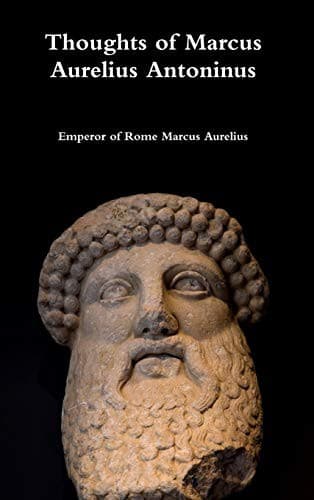
Thoughts of Marcus Aurelius AntoninusMarcus Aurelius, Emperor of Rome
PhilosophyPhilosophy
Thoughts of Marcus Aurelius Antoninus
Marcus Aurelius, Emperor of Rome
Ethics; Life; Marcus Aurelius, Emperor of Rome, 121-180; Stoics
Unhappy am I because this has happened to me? Not so, but happy am I,
though this has happened to me, because I continue free from pain,
neither crushed by the present nor fearing the future. For such a thing
as this might have happened to every man; but every man would not have
continued free from pain on such an occasion. Why then is that rather a
misfortune than this a good fortune? And dost thou in all cases call
that a man's misfortune which is not a deviation from man's nature? And
does a thing seem to thee to be a deviation from man's nature, when it
is not contrary to the will of man's nature? Well, thou knowest the will
of nature. Will then this which has happened prevent thee from being
just, magnanimous, temperate, prudent, secure against inconsiderate
opinions and falsehood; will it prevent thee from having modesty,
freedom, and everything else, by the presence of which man's nature
obtains all that is its own? Remember too on every occasion which leads
thee to vexation to apply this principle; not that this is a misfortune,
but that to bear it nobly is good fortune.
50. It is a vulgar, but still a useful help towards contempt of death,
to pass in review those who have tenaciously stuck to life. What more
then have they gained than those who have died early? Certainly they
lie in their tombs somewhere at last, Cadicianus, Fabius, Julianus,
Lepidus, or any one else like them, who have carried out many to be
buried, and then were carried out themselves. Altogether the interval is
small [between birth and death]; and consider with how much trouble, and
in company with what sort of people, and in what a feeble body, this
interval is laboriously passed. Do not then consider life a thing of any
value. + For look to the immensity of time behind thee, and to the time
which is before thee, another boundless space. In this infinity then
what is the difference between him who lives three days and him who
lives three generations?[A]
[A] An allusion to Homer's Nestor, who was living at the war of
Troy among the third generation, like old Parr with his hundred
and fifty-two years, and some others in modern times who have
beaten Parr by twenty or thirty years if it is true; and yet
they died at last. The word is [Greek: trigerêniou] in
Antoninus. Nestor is named [Greek: trigerôn] by some writers;
but here perhaps there is an allusion to Homer's [Greek:
Gerênios hippota Nestôr].
51. Always run to the short way; and the short way is the natural:
accordingly say and do everything in conformity with the soundest
reason. For such a purpose frees a man from trouble,+ and warfare, and
all artifice and ostentatious display.
V.
Public-domain text, read in full here on John Shaqi.
Reviews
Reviews
No reviews yet
Be the first to share your thoughts on this work.
Elsewhere in the archive
Join the Discussion
Join the discussion
Sign in to leave a comment or review.
Sign InorCreate an account