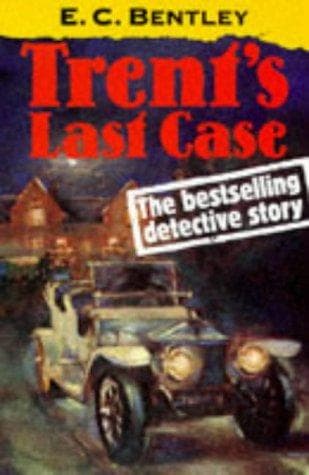
Detective and mystery stories; Trent, Philip (Fictitious character) -- Fiction
A constrained smile lighted Marlowe’s face for a moment. “I don’t know
that there’s anything more to tell. I returned to Marlstone, and faced
your friend the detective with such nerve as I had left. The worst was
when I heard you had been put on the case—no, that wasn’t the worst.
The worst was when I saw you walk out of the shrubbery the next day,
coming away from the shed where I had laid the body. For one ghastly
moment I thought you were going to give me in charge on the spot. Now
I’ve told you everything, you don’t look so terrible.”
He closed his eyes, and there was a short silence. Then Trent got
suddenly to his feet.
“Cross-examination?” enquired Marlowe, looking at him gravely.
“Not at all,” said Trent, stretching his long limbs. “Only stiffness of
the legs. I don’t want to ask any questions. I believe what you have
told us. I don’t believe it simply because I always liked your face, or
because it saves awkwardness, which are the most usual reasons for
believing a person, but because my vanity will have it that no man
could lie to me steadily for an hour without my perceiving it. Your
story is an extraordinary one; but Manderson was an extraordinary man,
and so are you. You acted like a lunatic in doing what you did; but I
quite agree with you that if you had acted like a sane man you wouldn’t
have had the hundredth part of a dog’s chance with a judge and jury.
One thing is beyond dispute on any reading of the affair: you are a man
of courage.”
The colour rushed into Marlowe’s face, and he hesitated for words.
Before he could speak Mr. Cupples arose with a dry cough.
“For my part,” he said, “I never supposed you guilty for a moment.”
Marlowe turned to him in grateful amazement, Trent with an incredulous
stare. “But,” pursued Mr. Cupples, holding up his hand, “there is one
question which I should like to put.”
Marlowe bowed, saying nothing.
“Suppose,” said Mr. Cupples, “that some one else had been suspected of
the crime and put upon trial. What would you have done?”
“I think my duty was clear. I should have gone with my story to the
lawyers for the defence, and put myself in their hands.”
Public-domain text, read in full here on John Shaqi.
Reviews
Reviews
No reviews yet
Be the first to share your thoughts on this work.
Elsewhere in the archive
Join the Discussion
Join the discussion
Sign in to leave a comment or review.
Sign InorCreate an account