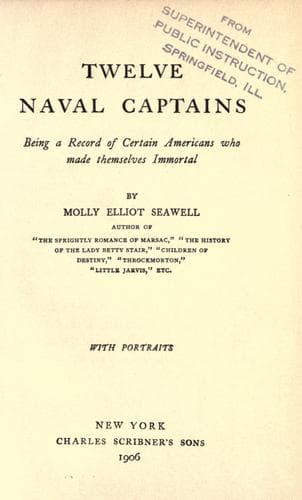
Twelve Naval Captains: Being a Record of Certain Americans Who Made Themselves ImmortalSeawell, Molly Elliot
History
Twelve Naval Captains: Being a Record of Certain Americans Who Made Themselves Immortal
Seawell, Molly Elliot
United States. Navy -- Biography
Sometimes the squadron was blown off, and sometimes it had to claw
off the land, but it always returned. The loss of the Americans was
small; that of the Tripolitans great. One of the American gunboats
exploded, and a terrible misfortune happened in the loss of the ketch
Intrepid[9] and her gallant crew. Reinforcements were promised from the
United States, which did not come in time, and Preble met with all the
dangers and delays that follow the making of war four thousand miles
from home; but he was the same indomitable commander, feared alike by
his enemies and his friends. On the 10th of September the President,
forty-four guns, and the Constellation, thirty-eight guns, arrived;
the John Adams had come in some days before. By one of those strange
accidents, so common in the early days of the navy, Commodore Barron
had been sent out in the President to relieve Commodore Preble by the
government at Washington, which, in those days of slow communication,
knew nothing of Preble's actions, except that he was supposed to be
bombarding Tripoli. The season of active operations was over, however,
and nothing could be done until the following summer. Meanwhile the
Bashaw had a very just apprehension of the return of such determined
enemies as the Americans another year, and gave unmistakable signs of a
willingness to treat. To that he had been brought by Commodore Preble
and his gallant officers and crews. Knowing the work to be completed,
Preble willingly handed over his command to Commodore Barron. He had
the pleasure of giving Decatur, then a post captain, the temporary
command of the Constitution. Before leaving the squadron, he received
every testimonial of respect, and even affection, from the very men who
had so bitterly complained of his severe discipline and fiery temper.
It was said at the time, that when the squadron first knew him he had
not a friend in it, and when he left it he had not an enemy. At that
day duelling was common among the privileged classes all over the
western world, especially with army and navy officers; but so well did
Commodore Preble have his young officers in hand that not a single duel
took place in the squadron as long as he commanded it.
Public-domain text, read in full here on John Shaqi.
Reviews
Reviews
No reviews yet
Be the first to share your thoughts on this work.
Elsewhere in the archive
Join the Discussion
Join the discussion
Sign in to leave a comment or review.
Sign InorCreate an account