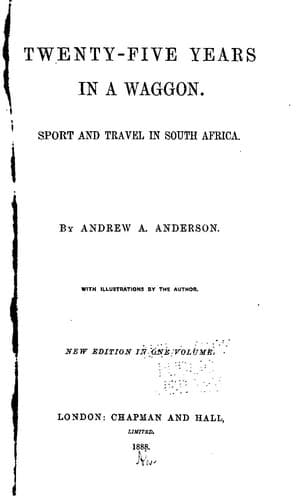
Twenty-Five Years in a Waggon in South Africa: Sport and Travel in South AfricaAnderson, Andrew A.
History
Twenty-Five Years in a Waggon in South Africa: Sport and Travel in South Africa
Anderson, Andrew A.
Africa, Southern -- Description and travel; Anderson, Andrew A. -- Travel -- Africa, Southern
The king's wives do not pick in the corn gardens, but his children do,
and also carry water the same as others; his reason is they must learn
to do such things; and his daughters go naked like the other girls, and
frequently pay my waggon a visit for tufa or tusa (present); sometimes
they are seen walking about with black skin kilts. Most of them are
young, but they, as well as the women, wear few or no ornaments; very
few beads are used, mostly pieces of leather strips round the neck and
wrists, none on their legs or head, as is seen on other tribes. The
Matabele women do not seem to take so readily to clothes as all the
other tribes, who are eager to be dressed up in petticoats, because I
presume it gives them greater liberty of action in their loins, from
their present cramped and bound-up state in their leather coverings.
I was surprised one day, soon after my arrival here, on returning in the
afternoon to my camp, to find four Zulu girls sitting under my waggon,
chatting and laughing with my Hottentot driver and forelooper, having
with them three fine bunches of beautiful ostrich feathers. When I
looked under the waggon and they saw me, they all gave a yell of
delight, and came out, when I recognised them as old friends who had
frequently washed my clothes when I went to Barkly, in Griqualand West,
two years back, and always admired their clean neat appearance in their
white European clothes. They told me their mother, who was a widow
woman, wanted to go back to her nation in Matabeleland, and they had
only lately arrived, having been on the road six months; and having
heard of my arrival, they came to see me, and had brought me some
ostrich feathers as a present, and as they knew my two boys they seemed
to be at home again.
I asked them what they had done with their clothes. They said they had
them tied up in bundles and were in the hut occupied by their mother,
where they lived, and as they were amongst their own people they dressed
or undressed as the other girls. I found them to be very convenient, as
they did my washing and other things for me. I took the feathers and
paid them in beads, kerchiefs, tobacco for snuff, and such things they
wanted as presents; they would not take them in payment, showing these
people have some kind feeling; and during my stay at this station they
remained with me the greater portion of every day, their old mother
coming occasionally to pay me a visit. They could speak English
perfectly; they told me they would like to go back with me if their
mother would let them, but four grown-up girls in my waggon would have
been too much of a good thing. I should occupy many months in
returning, if I ever did, and it turned out that I did not visit Barkly
again for three years. If there had been women at this station wearing
clothes, these girls would have retained theirs; it only shows the force
of example.
Public-domain text, read in full here on John Shaqi.
Reviews
Reviews
No reviews yet
Be the first to share your thoughts on this work.
Elsewhere in the archive
Join the Discussion
Join the discussion
Sign in to leave a comment or review.
Sign InorCreate an account