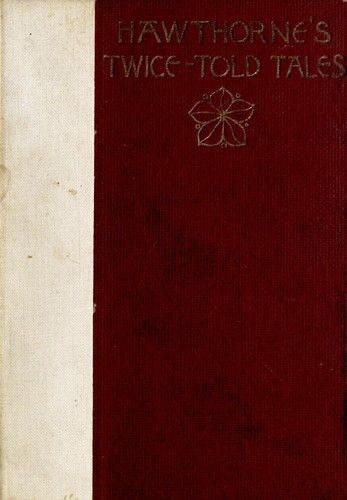
Historical fiction, American; New England -- Social life and customs -- Fiction; Short stories
"Yes, friends, ye are old again," said Dr. Heidegger, "and lo!
the Water of Youth is all lavished on the ground. Well--I bemoan
it not; for if the fountain gushed at my very doorstep, I would
not stoop to bathe my lips in it--no, though its delirium were
for years instead of moments. Such is the lesson ye have taught
me!"
But the doctor's four friends had taught no such lesson to
themselves. They resolved forthwith to make a pilgrimage to
Florida, and quaff at morning, noon, and night, from the Fountain
of Youth.
LEGENDS OF THE PROVINCE HOUSE
I
HOWE'S MASQUERADE
One afternoon, last summer, while walking along Washington
Street, my eye was attracted by a signboard protruding over a
narrow archway, nearly opposite the Old South Church. The sign
represented the front of a stately edifice, which was designated
as the "OLD PROVINCE HOUSE, kept by Thomas Waite." I was glad to
be thus reminded of a purpose, long entertained, of visiting and
rambling over the mansion of the old royal governors of
Massachusetts; and entering the arched passage, which penetrated
through the middle of a brick row of shops, a few steps
transported me from the busy heart of modern Boston into a small
and secluded courtyard. One side of this space was occupied by
the square front of the Province House, three stories high, and
surmounted by a cupola, on the top of which a gilded Indian was
discernible, with his bow bent and his arrow on the string, as if
aiming at the weathercock on the spire of the Old South. The
figure has kept this attitude for seventy years or more, ever
since good Deacon Drowne, a cunning carver of wood, first
stationed him on his long sentinel's watch over the city.
The Province House is constructed of brick, which seems recently
to have been overlaid with a coat of light-colored paint. A
flight of red freestone steps, fenced in by a balustrade of
curiously wrought iron, ascends from the court-yard to the
spacious porch, over which is a balcony, with an iron balustrade
of similar pattern and workmanship to that beneath. These letters
and figures--16 P.S. 79--are wrought into the iron work of the
balcony, and probably express the date of the edifice, with the
initials of its founder's name. A wide door with double leaves
admitted me into the hall or entry, on the right of which is the
entrance to the bar-room.
Public-domain text, read in full here on John Shaqi.
Reviews
Reviews
No reviews yet
Be the first to share your thoughts on this work.
Elsewhere in the archive
Join the Discussion
Join the discussion
Sign in to leave a comment or review.
Sign InorCreate an account